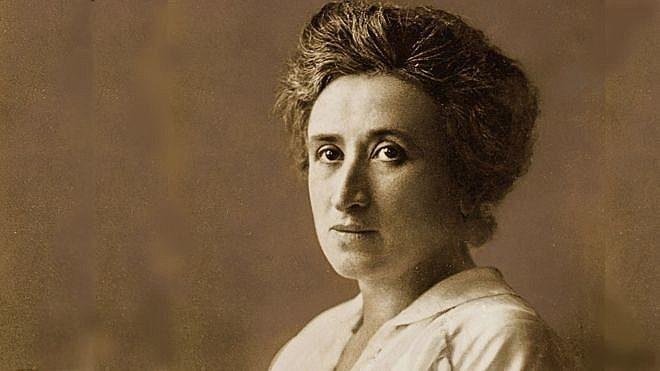
Exactly 107 years ago, on January 15, 1919, the German revolutionary Rosa Luxemburg was assassinated by a paramilitary militia along with her comrade Karl Liebknecht. Her work, however, remains relevant and helps us understand much of what we experience today. Among the themes she addressed, she wrote about imperialism, with observations that are still reflected upon today.
The BdF Interview featured Professor Antonio Mota, from the Federal University of São Paulo (Unifesp), who showed how Rosa Luxemburg can help us understand phenomena we are currently experiencing, such as the increasingly deliberate imperialist stances of Donald Trump.
“Look at the pillars she lays in her interpretation of imperialism, for example: imperialism is always linked to militarism. And militarism not as an abstract action, but as an economic instrument. Military investments drive the capitalist economy, in terms of innovation, in terms of large oligopolies, the profits of these large oligopolies—this she denounced back then,” he highlighted.
Rosa Luxemburg pointed out that the expansion of Germany’s war fleet before the First World War would generate profits for the capitalists of that time. Nowadays, military spending grows by hundreds of billions of dollars per decade, and the profits serve the same groups.
“Rosa Luxemburg’s work is relevant today and helps us understand this current moment. I don’t think she gives ready-made answers, but she helps us have political parameters to act upon,” he pondered.
The expert also says that the German revolutionary was always an enthusiast of the masses. The concept of ‘mass’, incidentally, emerged at the end of the 19th century, and was often treated critically by bourgeois authors, who associated collective movements with barbarism or lack of culture.
“I argue that Rosa Luxemburg is the first author in the political field to give a positive connotation to the political action of the masses. This gains breadth of reflection in her work. It appears from her first text, in 1893. But it gains concreteness with the Russian Revolution of 1905,” he explained.
The author understood that there is no formula that will work for all scenarios. “So, to understand the necessary political step for Poland, it is important to understand the historical situation of Poland; as well as for Germany. She was linked to Marxism from a very early age, which does not mean that she simply repeated the conclusions of Karl Marx and Friedrich Engels, far from it,” Mota emphasized.
“Rosa Luxemburg is a fascinating person because of her political ideas, but also because of the way she wrote,” he summarized.