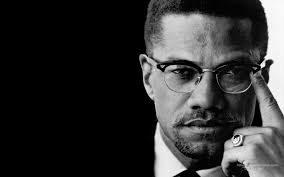
On February 21, 1965, 61 years ago, the revolutionary Malcolm X was assassinated in New York. His legacy is far from being confined to the past; it is a key essential reading for understanding the dynamics of oppression in contemporary America. The figure of El-Hajj Malik El-Shabazz, known in the world as Malcolm X, stands as a watershed in the political and ideological landscape of the 20th century.
Far from being merely an icon of Black nationalism, his intellectual evolution and radical critique of the American system offer one of the most penetrating anti-imperialist readings of class conflict, an analysis that remains surprisingly and dramatically relevant today. Malcolm X’s mature thought cannot be reduced to a racial issue; rather, it constitutes a theory of class conflict from an internationalist perspective. He was the thinker who exposed American bourgeois democracy, revealing the structural link between internal racism and global imperialism. His legacy is crucial because he brought materialist analysis to the heart of social life, defining the African American ghetto not as a mere degraded neighborhood, but as an “internal colony.” This definition is the starting point of his rupture: if the ghetto is a colony, then Afro-descendants do not fight only for “civil rights” within the system (as a part of the Civil Rights Movement did), but for “human rights” and national liberation in the then “Third World” sense, like all peoples oppressed by colonial and neocolonial powers.
His strategy did not aim at integration into the white bourgeois order, but at its destruction, replacing it
with political and economic self-determination that positioned Black people as the revolutionary vanguard.
His philosophy embodied the idea that decolonization was not a geographically limited phenomenon, but a global process that inevitably had to involve the centers of imperial power as well.
In his view, the American bourgeoisie used racism as the most powerful instrument for dividing the working class: the suppression of Black people was not a moral accident, but an economic imperative to keep wages low and fragment class consciousness. This analysis, while not always explicitly stated in orthodox Marxist terms, shares its materialist matrix: the condition of oppression is determined by economic relations and the power structure, not by mere morality. Structural racism functions as a mechanism of super-exploitation and social control essential for capitalist reproduction. Malcolm X’s thought, filtered through the legacy of Black Power and the analysis of the “internal colony” and the “political prisoner,” also resonated in Europe and Italy, acting as a powerful critical lens for a segment of the revolutionary left. In particular, his legacy has permeated the debates of the Italian extra-parliamentary left throughout the last century, providing inspiration for the analysis and praxis of groups such as the Nuclei Armati Proletari (NAP), which have sought to apply the idea of the “internal colony” and urban guerrilla warfare to the context of Italian prisons and social margins. This influence manifested itself as an ideological and practical inspiration for understanding and radicalizing the class struggle in the Western context.
The book by Pasquale Abatangelo, a guerrilla fighter first with the NAP and later with the Red Brigades, *Correvo pensando ad Anna*, as well as the documentary based on the book, amply demonstrates this.
It is here that the African American experience became an analytical model: if African Americans were the “internal colony” of the United States, then marginalized groups in Europe—the urban subproletariat, the incarcerated, the unemployed of the Global South—could be interpreted as the “internal colony” of the Italian bourgeois state. The analysis of racism and colonialism was partly reworked as an analysis of the class oppression suffered by the lowest strata of the proletariat. Today, faced with the advance of rampant neoliberalism and global repression, the urgency of Malcolm X’s anti-imperialism has not diminished. His analysis of internal colonization is now absolutely relevant. Capitalist states have transformed migrants from the Global South into a permanent industrial reserve army, stripped of their rights and subjected to new forms of slavery. This is not just about economic exploitation, but about a political strategy of segmenting the labor market: the system uses the migrant’s illegal or precarious status to depress overall wages and, fundamentally, to fracture the unity of the working class. By encouraging competition and the hatred between the penultimate and the last of the production chain, the bourgeoisie ensures that social anger is directed horizontally toward the oppressed and not vertically toward capital, thus guaranteeing the reproduction of the system through the division of our class. Taking Malcolm X as a starting point, with his call for the unity of oppressed peoples, even outside the US context, means accepting the challenge of a struggle that is not national, but a global class struggle, and that must confront imperialist power wherever it manifests itself.
The struggle continues, and the voice of Malcolm X remains an indispensable guide for all those who believe in a world freed from oppression and exploitation. His spirit, like that of Frantz Fanon and Patrice Lumumba, lives on in the anti-colonial struggles of new vanguards, who today respond to the call of the Anti-Fascist International launched from Bolivarian Venezuela, which renews its dream and anti-imperialist resistance throughout the world.
By Geraldina Colotti, Resumen Latinoamericano, February 22, 2026.