Iran’s top security official Ali Larijani said he had received reports that several American soldiers had been taken prisoner during the ongoing war, accusing Washington of attempting to conceal the incident.
In a message posted on the social media platform X, Larijani wrote:
“It has been reported to me that several American soldiers have been taken prisoner. But the Americans claim that they have been killed in action.”
He added:
“Despite their futile efforts, the truth is not something they can hide for too long.”
Larijani suggested that the United States may be attempting to obscure the circumstances of the alleged captures by reporting American troops as killed in action.
“They promote a misleading narrative claiming that five or six American soldiers have been killed,” he said, adding that the number of reported deaths could later be increased under different explanations.
The United States quickly rejected the claim.
A spokesperson for US Central Command (CENTCOM) told Al-Jazeera that the Iranian allegations about captured American soldiers were false.
The exchange comes as the conflict between Iran and the United States continues to intensify following the launch of joint US-Zionist airstrikes on Iran on February 28, triggering waves of retaliatory attacks across the region.
Iranian Leadership Response
Larijani also issued broader remarks about the war, saying the United States had failed to achieve its strategic objectives in launching the military campaign against Iran.
In an interview broadcast by Iranian television, he said Washington’s strategy had been based on the assumption that the conflict could be concluded quickly.
“The Americans wanted to end the war in a short period of time,” Larijani said, adding that Iran had prevented this outcome.
According to Larijani, one of the goals of the campaign had been to create internal instability in Iran and ultimately divide the country.
He said the United States and the zionist entity had also hoped that targeting Iran’s leadership would cause the political system to collapse.
Larijani argued that these efforts had failed, pointing to what he described as unity among the Iranian public during the conflict.
He warned that the killing of Iran’s Supreme Leader, Ali Khamenei, during the war would carry consequences and said Tehran would continue to respond.
Larijani also said Iran had maintained adequate domestic supplies of fuel and essential goods despite the conflict, adding that the government had worked to stabilize conditions across the country.
IRGC Military Operations
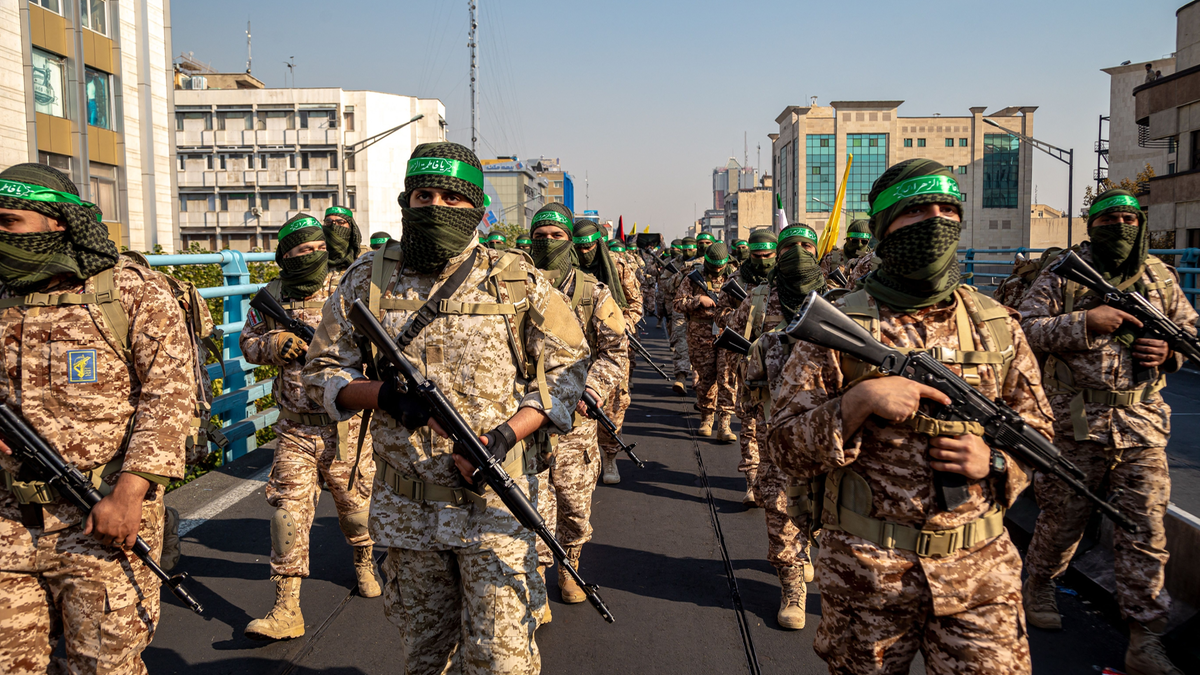
For its part, Iran’s Islamic Revolutionary Guard Corps (IRGC) said its forces have carried out extensive military operations during the first week of the war.
IRGC spokesperson Ali Mohammad Naeini told reporters that Iranian forces had launched hundreds of missiles and thousands of drones as part of retaliatory operations.
According to the IRGC, approximately 600 missiles have been fired since the start of the war, including ballistic missiles and cruise missiles using both liquid and solid fuel systems.
Iranian forces also conducted around 2,600 drone attacks during the same period, Naeini said.
He added that the operations targeted more than 200 locations and facilities connected to US and Israeli forces.
Among the systems reportedly struck were advanced radar installations linked to the US-operated THAAD missile defense network deployed in the region.
Naeini said Iranian attacks had destroyed seven advanced radar systems and disrupted part of what he described as the “American security umbrella.”
The IRGC spokesperson said the scale of Iranian firepower during the first three days of the conflict was comparable to the level of operations seen during a previous 12-day war.
Ongoing Retaliation
Iranian officials say the country is prepared for a prolonged confrontation.
Naeini stated that Iran’s armed forces are ready to sustain a large-scale war for up to six months at the current operational tempo.
“There is no reason for concern,” he said, adding that Iran’s military remained fully prepared and capable.
He said the country’s missile and drone capabilities remained intact and that operations would continue against US and Israeli targets.
Separately, Iranian officials said missile strikes had been launched against Israeli infrastructure during the latest phases of the confrontation.
Iranian media reported that missiles fired during the latest wave of operations struck strategic targets, including the Haifa oil refinery.
Iran said the attack was carried out using Khaibar-type missiles as part of the ongoing operation known as “True Promise 4.”
Iranian officials said the strike came in response to earlier US-Israeli attacks on Iranian energy infrastructure, including the Tehran oil refinery.
The exchanges underline the rapidly expanding scope of the war, which has drawn in multiple actors across the region and intensified fears of a prolonged regional conflict.