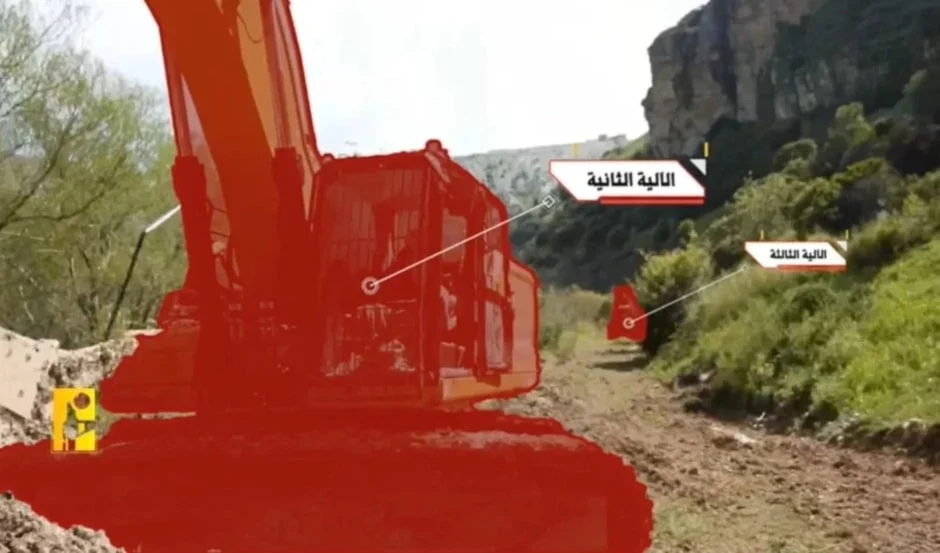
The Zionist media continued following up the resounding repercussions of the ambush carried out by the Islamic Resistance fighters near Litani River where the Zionist occupation forces tried to approach from Taybeh town on March 28, 2026.
As the zionist command was monitoring the troops advance into Litani River, Hezbollah was doing the same, zionist Channel 12 reported.
The Zionist media outlets cited some soldiers who fell into the ambush that they could not even raise their heads and that they could only move crawling.
“Within a short time, most of the Yahalom unit’s force was hit, including a lieutenant colonel who was seriously wounded. Soldiers struck by shrapnel, as well as support and backup forces, all sustained critical injuries. A large number of soldiers were injured, resulting in a large-scale and noticeable mass casualty incident in the field.”
Fighters and commanders recounted the toughest battle they had ever fought, even compared to the fighting in Lebanon during Operation Northern Arrows in 2024, and compared to the maneuver in Gaza, the channel added.
“It did not end there. After the withdrawal of the forces and the evacuation of the wounded, Hezbollah elements were able to reach the abandoned equipment, which is considered a major failure from the point of view of the Israeli army.”
It was a historical failure, the Channel affirmed.
Hezbollah military media documented the Israeli failure, publishing a video that shows the military equipment left by the Zionist soldiers before they fled the battle.
One colonialist media source stated:
In a short period of time, most of the Yahalom unit’s forces were injured, including an officer of the rank of major who was seriously wounded. The soldiers who were hit by shrapnel, as well as the supporting and auxiliary forces, all suffered extremely serious injuries. A large number of soldiers were injured, resulting in a large-scale and noticeable multiple-casualty incident in the field.
The story did not end there. After the withdrawal of forces and the evacuation of the wounded, Hezbollah elements were able to access the abandoned equipment, which was considered a major failure from the perspective of the Israeli army.
Hezbollah seized some equipment and then filmed the vehicles of the “Yehalom” unit in broad daylight without any intervention. The lack of an immediate attack to destroy the equipment or prevent the enemy from accessing it raises crucial questions about the decisions of field commanders. This is not just an operational failure, but also a failure in overall situational awareness and intelligence.
Zionist channel 12 report that, while the zionist leadership was monitoring the advance of Israeli forces towards the Litani River via screens, Hezbollah was doing the same.
In a short time, most of the Yehalom unit’s forces were injured, including a lieutenant who was seriously wounded. The soldiers who were hit by shrapnel, as well as the support and backup forces, all suffered extremely serious injuries. A large number of soldiers were injured, leading to a large-scale and noticeable multiple-casualty incident in the field.
Fighters and commanders recounted the most difficult battle they had ever faced, even compared to the fighting in Lebanon during the “Arrows of the North” operation in 2024, and compared to the maneuver in Gaza.
One of them said: “You lie on the ground, crawl towards the wounded and treat them, while your body trembles every second from the non-stop explosions.
Due to the extent of the losses and the situation on the ground, a decision was made to withdraw, including ending the mission. This decision reached the highest levels and included immediate consultations between the division commander and the commander of the Northern Command. During the withdrawal, the forces were forced to make exceptional decisions, including abandoning equipment and engineering tools belonging to the Yehlam unit. These were not decisions made lightly to leave the equipment in the field. This decision also reached the highest levels, including the commander of the Northern Command and the Chief of Staff, who agreed to this step.
This battle is likely to be remembered as one of the most difficult since the resumption of fighting in Lebanon. It will be recorded in military history not only for the intensity of the fire, the scale of the losses, and the failure in planning.