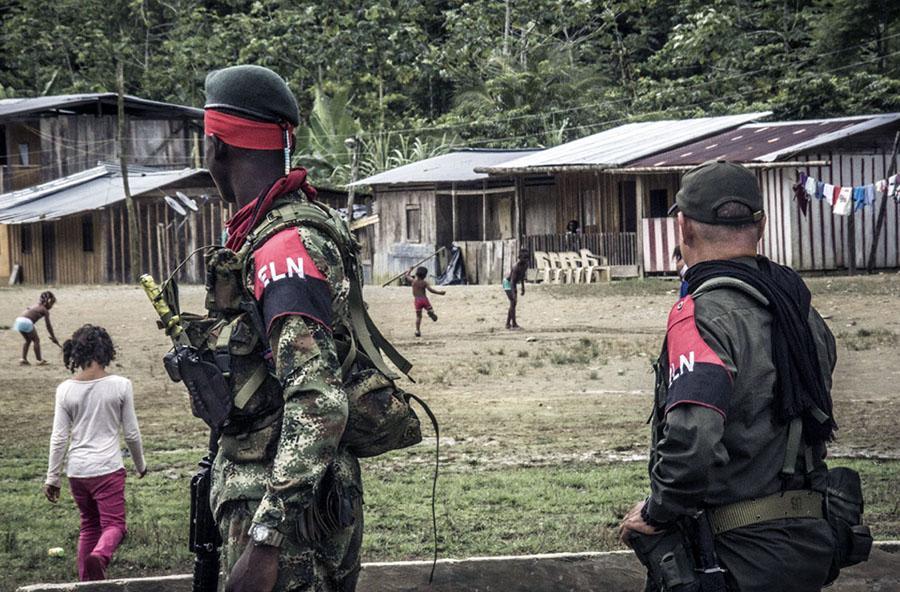
Some commentators have claimed that the ELN is “out of touch” with the proposed National Agreement, when it should be quite the opposite. What should truly be considered “out of touch” is the social, political, and armed conflict that has persisted for over seven decades without resolution. We have stated that the logic and strategies that have been repeatedly applied should be analyzed, as they have ultimately led us to the same impasse.
Einstein would say that stupidity lies in expecting positive results by doing the same things that previously led to failure. All the logic and strategies of the State and governments have been centered on seeking peace through surrender, capitulation, and pacification; these have worked for them in that regard, but not for definitively ending this conflict with its social, political, and economic roots. I remember when the M-19 and part of the EPL demobilized (1990). This event was presented as the “end of armed struggle in Colombia,” and commentators said that all that remained were gangs, just like now. In those years (1993), I met Antonio Navarro in Havana, in the context of the São Paulo Forum. In one of his outbursts of anger, he told me, “You won’t last another year in the guerrilla.”
That euphoria for peace would soon end, and the armed conflict would continue. César Gaviria’s “comprehensive war” failed to eliminate the guerrillas, nor did Pastrana with his Plan Colombia, and then Uribe came to power. Santos would win a Nobel Prize for waging war, something that’s fashionable now, and he would apply the same formula to demobilize and disarm the FARC. It was said back then (2016), ten years ago now—not a week, not a month, but a decade—that the ELN had no other option but to follow the same path. The government acted clumsily, blocking the process with the ELN and dragging it out until the agreement with the FARC was ready, thus forcing its acceptance. “The ELN missed the boat,” commentators said. Today we are at that same point, but with 36 more years of armed struggle than the M-19 and 10 more than the FARC. Essentially, the country continues with its structural crisis: poverty, corruption, political persecution, paramilitarism, and the absence of an economic plan that addresses people’s anxieties.
Are we going to continue enduring so much suffering among the poor at hospital doors and the blatant disregard shown by the EPS (Health Promoting Entities)? Are we going to keep blaming the people for drug trafficking, when at its core lies the lack of responsibility and policies from centers of power, from the United States to the Colombian government and state? It’s up to the population as a whole to help them, because they haven’t been capable of doing so themselves—let’s not kid ourselves. Or are the authorities going to blame the criminals for their own incompetence, perpetuating the vicious cycle of prosecution and repression? This sociological theory can be taught at the Sergio Arboleda University, but the problem is that it’s becoming widespread in public opinion. God save Colombia from this blindness.
The spirit of the National Agreement lies in going to society to seek help, their opinions, their wisdom, their life experiences. Deep down, there are shortcomings among the ruling classes in listening to others, and when we don’t take others into account, we only hear the solitude of words devoid of life. Peace can be real when change ceases to be just a promise. Peace is built along the same path that brings about change.
ADDENDUM 1: With an act of war, Trump won the Nobel Peace Prize and now wants to seize Venezuela’s oil.
ADDENDUM 2: What if Milei followed Trump’s bad example, but with the Falkland Islands?
Commander Antonio García