Comandante Antonio García
“Peoples who do not know each other must hasten to get to know each other, like those who are going to fight together.”
José Martí
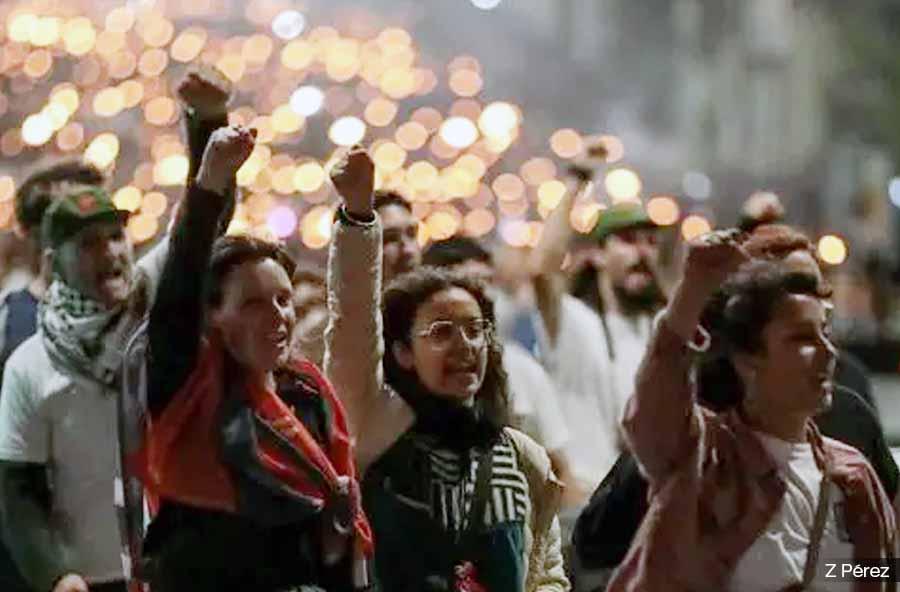
With a massive torchlight march on January 27, Cuban youth paid homage to the Latin American hero José Martí, on the eve of his 173rd birthday. This great mobilization took place amidst one of the most violent imperialist aggressions against Cuba, Venezuela, Colombia, Nicaragua, Mexico, and all of Latin America; thus, Martí’s legacy of dignity, freedom, and sovereignty reaffirms its relevance at the heart of our struggles.
Martí’s emancipatory struggle continues to be an ethical and political reference point, a beacon and light for the dark night that envelops our peoples. This is what Fidel taught us, starting in January 1953, when he led the first of these marches to commemorate the centennial of the Cuban hero’s birth. At that time, Martí was a symbol of the struggle against the Batista dictatorship, and the marches aimed to demand freedom for the Cuban people.
Martí taught us through his life that the sovereignty of nations is a right and an obligation of every human being, not the exclusive responsibility of states. It is the right of every person to cultivate and enjoy the fruits and resources that nature’s abundance has bestowed upon our lands for all; but it also implies defending them, even with one’s life if necessary.
This same January 27th, while Cuba was giving us another lesson in dignity and anti-imperialism, the Latin American and Caribbean Economic Forum was beginning in Panama City. Seven presidents from the region and hundreds of business leaders gathered to discuss “the future,” trade, technology, and above all, business, amidst a harsh climate of regional disintegration and the voracious appetite of the United States, which seems to be devouring us.
Auditoriums empty of ordinary people, but full of millionaires. We long for the times when Fidel and Chávez led the integration of a continent that rose up against imperialism and U.S. hegemony. We should remember the Summit of the Americas in Mar del Plata, the ALBA and MERCOSUR meetings, and the sessions of the World Social Forum.
Today, conditions in Latin America are different. The United States, through threats, blackmail, and open aggression, imposes its agenda. Thus, several presidents have opted for subservience. Others, unable to defend themselves militarily and politically, are forced to submissively accept the offenses and humiliations of the northern government under the guise of false cooperation or international diplomacy. Progressive governments in Latin America are attempting to negotiate with a gun to their heads.
Brazilian President Lula da Silva also acknowledged that the region’s risk, given its geographical proximity to the world’s greatest military power, is heightened by the lack of effective regional cooperation mechanisms: “Our summits are empty, with the absence of key regional leaders. CELAC is paralyzed,” he said.
Others are less concerned with dignity and dedicate themselves to flattering the United States and extending its tariff practices. Traitors have always existed.
Despair is not an option for our people. We have Martí. We have the history of our peoples, who struggle and have defeated the fiercest enemies in every historical era: Cuba, Vietnam, Algeria, Bolivarian Venezuela.
Therefore, defending Latin American sovereignty and forging a new regional integration compels us to build from the ground up. To paraphrase Martí, we can say: if some lack the courage, let them not deny it to the people…
When states are incapable of defending sovereignty, it falls to the people to take up that struggle.
Source: https://eln-voces.net/2026/02/02/la-desesperanza-no-es-opcion/