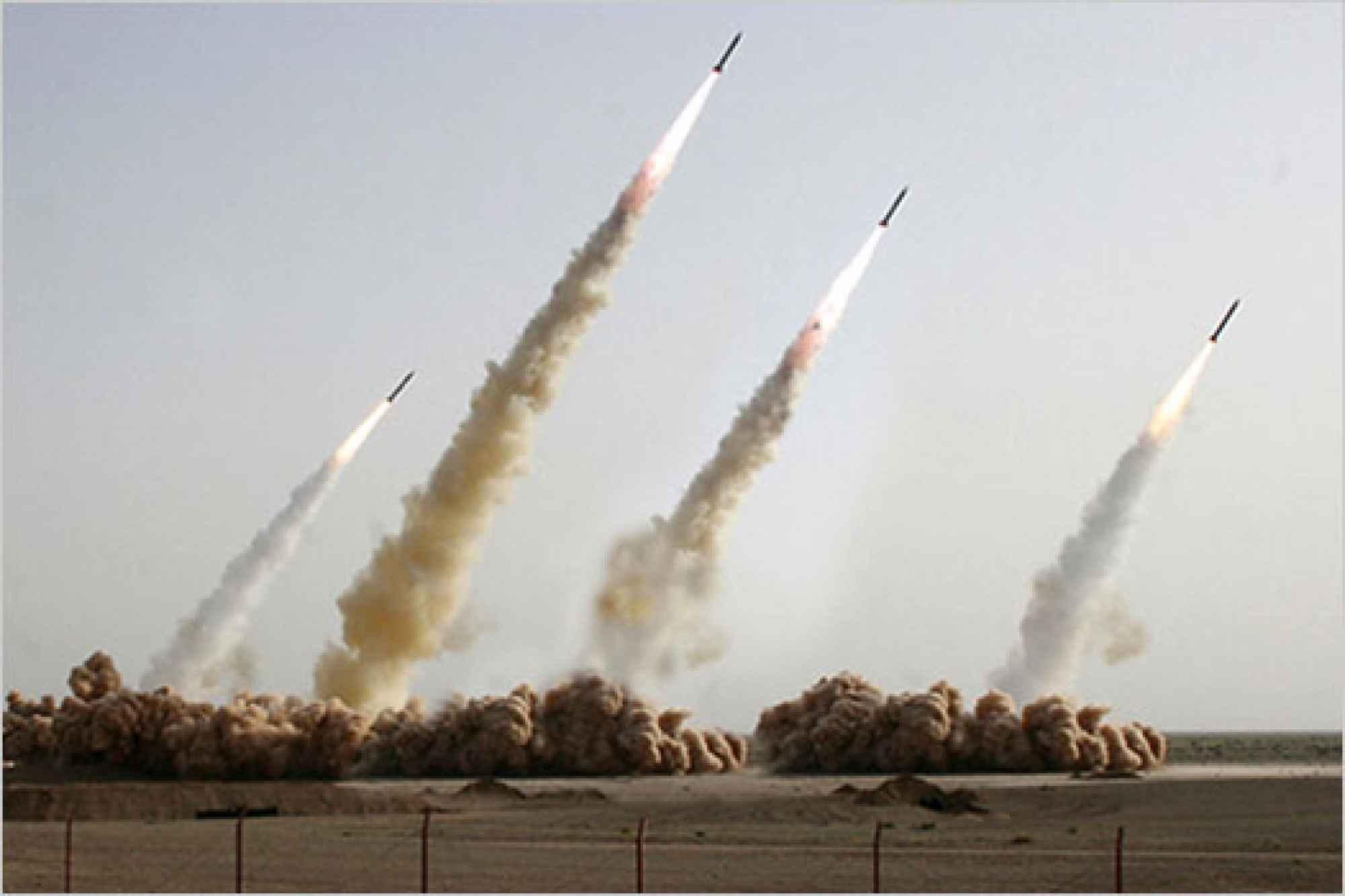
Iran’s Islamic Revolution Guard Corps (IRGC) announced the continuation of wave 89 of Operation True Promise 4 under the call of “Ya Haidar Karrar,” dedicating the launch to its martyred navy chief, Admiral Alireza Tangsiri. A statement by the IRGC’s Public Relations revealed that a combination of heavy and precise missiles, namely Qiam, Emad, and the multi-warhead Qadr, were deployed in the operation.
According to the statement, the missile strikes created a belt of fire, stretching from Ramat Gan to Holon, Palmachim, and Bnei Brak, east of Tel Aviv. Zionist media had reported extensive damage in the named areas, as well as confirmed casualties.
The Iranian operation had imposed a state of heightened alert among illegal settlers, as they prepare for further escalation. Significant disruption was reported, while millions of settlers rushed to seek shelter, causing widespread chaos and major street congestion. At the same time, efforts to enter shelters lasted for extended periods, especially in the lead-up to the Jewish Passover holiday.
At the same time, missile and drone operations continue pounding targets spanning from the occupied north to the occupied south, while a substanial portion of the IRGC’s military capabilities remains undeployed and will be progressively activated in the upcoming days.
Iran’s ‘largest missile wave’ leaves ‘Tel Aviv’ extensively damaged
Earlier today, zionist media reported that Iran’s latest missile wave, consisting of at least 10 ballistic missiles, launched toward Tel Aviv was among the largest in recent weeks. The wave came as launches from Iran and Hezbollah in Lebanon continue with rising intensity.
The strikes reportedly made a direct impact and resulted in confirmed casualties, including the collapse of a building in Petah Tikva, while several vehicles were set ablaze. More impacts were reported in Ramat Gan and Holon. Moreover, extensive damage was reported in Rosh Haayin, where Iranian missiles struck.
As sirens blared across Tel Aviv, live broadcasts were interrupted, with reporters in the i24 studio having to cut off the broadcast to seek shelter. Coverage was shifted to an external correspondent. Meanwhile, with sirens still blasting, zionist emergency services reported difficulty in operations.
Over two million settlers fled to shelters, while military analysts admitted that zionist air defense systems faced an unprecedented challenge posed by the Iranian missiles.
Additionally, Channel 14 cited military experts as saying the missile barrage was the “most significant” since week two of the war, emphasizing that it was accompanied by a surge in missile launches targeting the occupied north from southern Lebanon, further exacerbating the security challenge.
IRGC launches waves of strikes
The Islamic Revolution Guard Corps (IRGC) announced on Wednesday the execution of a wide-scale, coordinated military operation involving ballistic missiles, drones, and rocket artillery strikes targeting US and Israeli installations, including positions associated with the US Fifth Fleet in Bahrain, as well as an aircraft carrier and a tanker across West Asia.
In a statement, the IRGC said the strikes were carried out as part of the second round of the 89th wave of Operation True Promise 4, in coordination with allied Resistance forces across the region.
The group reported that several senior US naval officers were evacuated to hospitals in Manama following the strikes.
The IRGC also said it conducted multiple simultaneous operations, dedicated to recently killed commanders, including senior figures identified as Navy chief Admiral Alireza Tangsiri and Major General Jamshid Eshaqi.
Among its assertions, the group said it struck US early-warning radar systems deployed at naval facilities in regional waters and on islands in the United Arab Emirates. It further claimed responsibility for an attack on an Israeli-affiliated oil tanker operating under the commercial name Eco 1 in the central Gulf, saying the vessel was set ablaze.
The statement also said drones were launched towards a US aircraft carrier, the Abraham Lincoln, in the northern Indian Ocean, forcing it to withdraw further into open waters.
The IRGC said the operations were carried out under a code phrase invoking religious symbolism and involved “five large-scale operations” as part of the wider campaign.
Wave 89: IRGC strikes US military hideouts in honor of Yemeni martyrs
In a separate statement, the Islamic Republic of Iran Army (Artesh), announced earlier that it had carried out drone strikes targeting key US military assets and facilities across the region.
In a statement, the IRGC said the strikes were carried out as part of the 89th wave of Operation True Promise 4, in coordination with allied Resistance forces across the region.
Multi-axis strikes across occupied territories by IRGC, allies
According to the statement, the operation involved the launching of more than 100 heavy missiles and one-way attack drones, and 200 rocket-artillery rounds, targeting sites in the region. The strikes reportedly extended from northern to southern areas of the Israeli-occupied Palestinian territories.
The IRGC said the attacks targeted military positions and groupings of zionist occupation forces in several key areas, including Eilat, Tel Aviv, and Bnei Brak. It added that the operation was carried out in dedication to the martyrs of the Islamic Resistance in Yemen.
The strikes resulted in significant casualties and damage in the occupied territories and in the region.
Strikes expand to US positions in the region
The statement further reported, in a subsequent phase, that a US military site in Bahrain was targeted with precision strikes, hitting a hideout location housing around 80 military personnel.
Recent social media footage reportedly shows damage to Batelco infrastructure, a key host for major cloud providers like Amazon Web Services. A separate video appears to show US service members taking cover in a bunker during a missile strike on their base.
Additionally, the IRGC said that a US military helicopter unit stationed at Al-Udeid Airbase, in Qatar, was struck by ballistic missiles, resulting in the destruction of one helicopter and damage to others.
The IRGC emphasized that the operation reflects increasing coordination between Iran’s Armed Forces and Resistance factions across the region, describing it as a manifestation of unity within the Islamic world against “oppressive enemies”.
It also pointed to internal cohesion within Iran, emphasizing that both developments are key outcomes of the ongoing confrontation.
Broader impacts of the confrontation
The statement further stressed that the escalation has contributed to mounting pressure on the zionist regime, including deteriorating living conditions in the occupied territories ahead of the holiday season. It also underscored wider consequences affecting the United States, including disruptions to services, troop withdrawals from the region, and broader economic strain globally.
The IRGC concluded by stating that the current wave of operations would continue “with full intensity,” adding that further updates would be announced in due course.
Iranian Army targets US aerial assets, regional bases
In its 51st communique, the Artesh said its forces targeted the “deployment locations of US AWACS and refueling aircraft” stationed at Ben Gurion Airport, along with radar systems for detecting and tracking missiles and combat drones, as well as electronic warfare sites designed to counter drone operations in the United Arab Emirates.
The statement added that the Iranian Army had previously conducted drone strikes against US bases in regional countries and military sites in the occupied Palestinian territories, resulting in significant damage and disruptions to aerial combat support operations, including aircraft missions and missile and drone interception systems.
According to the statement, the latest wave of attacks utilized Arash-2 long-range heavy one-way attack drones, with an operational endurance of up to 2,000 kilometers.
The Artesh emphasized that its forces remain committed to continuing operations in response to attacks on Iran, particularly those targeting civilian areas, and reaffirmed their determination to pursue retaliation.
Iran to escalate missile strikes
An Iranian political-security official confirmed that Iran will gradually increase its missile launches in the coming period. The official also emphasized that this escalation will be matched by a significant increase in operations by the resistance axis, targeting enemy interests across the region.
The official further clarified that Iran’s strategic plan will leave no opportunity for the enemy, specifically focusing on the destruction of radar and defense infrastructures. This effort aims to undermine the enemy’s military capabilities and further strengthen Iran’s defense posture.
Highlighting Iran’s military strength, the official assured that the targeting of the enemy’s diverse military infrastructures will continue without interruption until deterrence is achieved. Iran’s missile arsenal, which he stressed was vast and advanced, will likely surprise adversaries, especially with the experience gained during the recent 12-day aggression.
In addition, the official pointed out that Iran possesses the necessary capabilities to defend itself and launch sustained strikes against its enemies for a prolonged period. The official also warned that any attempt to target Iranian infrastructure would result in severe and unexpected retaliation, emphasizing Iran’s firm commitment to responding forcefully and decisively.
Iran, according to the official, is determined to maintain the initiative in this ongoing situation, demonstrating resolve to respond without hesitation and exert pressure on its adversaries.
Joint airstrikes target zionist regime
The Yemeni Armed Forces (YAF) announced the launch of its third military operation targeting zionist- occupied territories, as part of an ongoing campaign in support of regional Resistance fronts.
In a statement, Brigadier General Yahya Saree said the YAF carried out the “third military operation” within the Sacred Jihad Battle, launching a salvo of ballistic missiles at “sensitive targets” in southern occupied Palestine.
The statement added that the operation was conducted “in continuation of supporting and backing the fronts of Resistance” and as part of a “religious, moral, and humanitarian duty” toward allied forces in Iran, Iraq, Lebanon, and Palestine.
Coordinated operation with regional allies
According to the statement, the strike was carried out in coordination with Iran and Hezbollah, emphasizing that the operation “successfully achieved its objectives.”
On Tuesday morning, at 6:25 am, the zionist military command said that it identified a missile attack from Yemen, as warning sirens sounded across southern occupied Palestine, extending from Dimona in the al-Naqab desert to coastal Askalan. Since early morning, multiple drone and rocket attacks have been launched from Lebanon, and a total of four waves of ballistic missile strikes from Iran.
The Yemeni Armed Forces warned that continued zionist escalation and attacks across the region, including in Lebanon, Iran, Iraq, and Palestine, would be met with further escalation.
They stated that such actions “will only push free Yemen toward further escalation,” indicating that operations would persist until aggression ceases and blockades are lifted.
Zionist injuries rise to 6,638 amid Iran, Hezbollah strikes
Earlier, the occupation’s Health Ministry announced that 118 injuries were admitted to hospitals on Tuesday, amid the ongoing regional escalation kick-started by the US and the Israeli regime.
According to the Ministry, the total number of injuries recorded in Israeli hospitals since the outset of US-zionist aggression on Iran, on February 28, has reached 6,638 cases as of midnight on March 31.
The Ministry also reported that the cumulative number of injuries admitted to Israeli hospitals since October 7, 2023, has risen to 82,956.