June 15, 2026
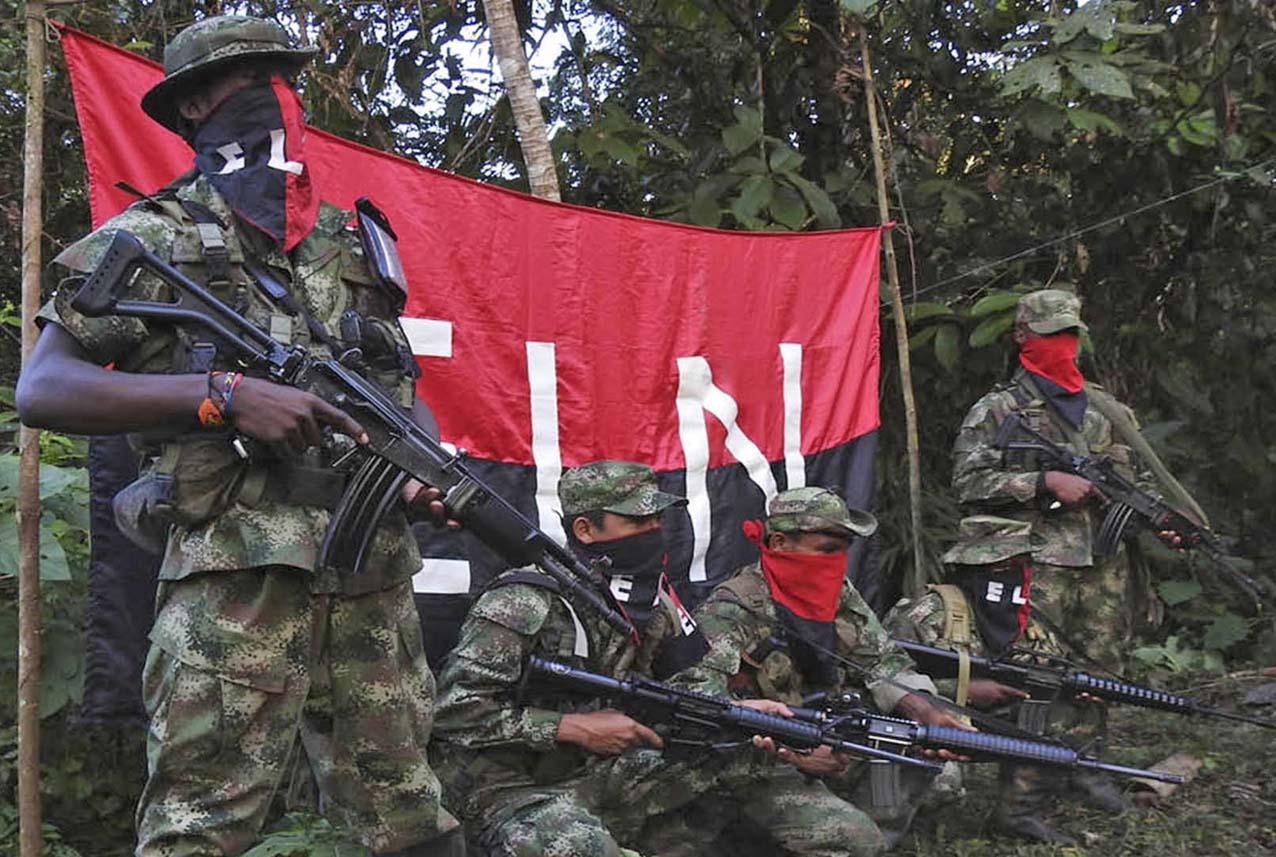
Second part of Aureliano Carbonell’s interview with Commander Nicolás Rodríguez Bautista, one of the founders of the National Liberation Army in Colombia.
Aureliano: What happened to the military during the years of the crisis?
Nicolás: Military activity decreased substantially from 1974 to 1979. However, even though military action was scarce during the crisis, there were important events that justified its continuation:
In the mid-1970s, an urban commando unit killed General Ramón Arturo Rincón Quiñones, Inspector General of the Armed Forces.
In 1976, the police station in Santa Rosa del Sur, Bolívar Department, was attacked and subdued, and the weapons were recovered.
Also in 1976, a military base belonging to the Tarqui Battalion in Tarazá, Antioquia, was attacked, resulting in six casualties.
The Camilo Torres Front, which had been almost annihilated in 1967, re-established itself in the Eastern Cordillera, and in 1976 it seized the village of Sabana de Novillos in Cesar Department. At the end of 1978, the municipal capital of Convención, in Norte de Santander, was also taken, the police station was seized, its weapons recovered, and the population rallied.
Small-scale armed propaganda actions were carried out in the city.
EMERGING FROM THE CRISIS
When did the situation begin to change?
In 1978, we managed to hold the First Meeting of Leaders, which brought together the heads of the urban and rural structures. The first collective leadership was elected, a plan to restructure the Organization was drawn up, and Leninist principles of organization were adopted. On the military front, as already mentioned, the capture of the municipality of Convención at the end of that year was carried out with complete success, which had a very positive impact internally, on the morale of our people, and on the process of recovery and development.
However, difficulties were not without their challenges. During these efforts, a faction emerged calling itself the National Coordinating Commission, attempting a demobilization strategy. Thanks to our swift action, this faction failed to achieve its objectives. Its conduct was made clear to the rest of the organization, and those responsible fled.
The efforts to rebuild continued amidst severe economic hardship, communication problems, and enemy activity, but nothing could stop us.
In these significant efforts to connect with grassroots movements, establish a structure based on Leninist organizational principles, achieve collective leadership through democratic processes, and safeguard internal unity, the clear leadership of Comandante Manuel Pérez Martínez emerged.
THE CITY
What was the situation in urban areas during those years?
During the most difficult times, the ELN crisis was much more severe in rural areas than in the cities. During those years, we faced many difficulties in communication between urban and rural areas. However, urban groups managed to sustain themselves and grow, especially after 1976, developing urban structures in most cities. Their work centered around student struggles, the organization of workers’ unions, and working-class neighborhoods. They were crucial in overcoming the crisis.
A NEW MOMENT. EXPANSION AND DEVELOPMENT.
How long will this crisis last?
The following years, the late 1970s and early 1980s, have been referred to internally as the years of “overcoming the crisis.” From then until the beginning of the first decade of the 2000s, it was a time of expansion, of progress in all areas, and of greater political and mass influence in the country.
The presidents during those years were, in order: Turbay Ayala (1978–1982), Belisario Betancur (1982–1986), Virgilio Barco (1986–1990), César Gaviria (1990–1994), Ernesto Samper (1994–1998), and Andrés Pastrana (1998–2002).
From the “Meeting of Leaders,” December 1978-January 1979, we arrived in 1983 at the First National Meeting of Leaders, “Heroes and Martyrs of Anorí.” This meeting appointed a National Directorate of 9 members and Comandante Manuel Pérez as its political leader. From there, in 1986, we reached another, more representative, democratic space: the First National Assembly, “Camilo Torres Restrepo,” which we later referred to as the first Congress of the Organization. There, we considered that the crisis had been overcome.
That Assembly represents a development in internal political life. It establishes the obligation to operate with national, local, and sectoral work plans, reaffirms the Leninist principles of organization, and implements greater levels of internal democracy and collective leadership at all levels.
By that time, there was already a stable and active National Directorate, but the Assembly further strengthened that national leadership and the Central Executive Committee (COCE) as the permanent executive body. It reaffirmed political and organizational work, and therefore mass mobilization, as an integral part of our overall dynamic and as a basic component of organizational work. Likewise, military approaches and goals were strengthened, reaffirming political-military integration. The Assembly also succeeded in strengthening and enhancing internal unity; by then, we were a larger organization with greater territorial reach.
FROM 1986 ONWARD
What would you highlight as the most important development in the years following that first congress? That is, in the last 40 years, from 1986 onward—quite a long time?
I’ll be very brief, just a few highlights:
– We gained a national vision, and it is on this basis that we build and develop national work plans.
– We advanced in understanding Marxist-Leninist theory. It became firmly established as our ideological guide, and a greater and more conscious effort was made to apply it in practice.
– Ideologically, we achieved greater and more widespread training of cadres at various levels, aided by the systematic development of schools at different levels and on various topics, as well as other training spaces.
– We successfully held and developed the organization’s Congresses as democratic forums where the general line, the overall plan, and the National Directorate are defined, as well as the Plenary Sessions of the National Directorate.
– We achieved significant military developments, understanding that in warfare, there are advances and setbacks; it is never a linear process. There are moments of great progress, but also others of difficulties and setbacks, influenced by multiple external and internal factors. We also achieved, on several occasions, a good balance and complementarity between military activity and political needs.
– In general terms, we managed to address the financial needs for developing national plans and achieving the established goals using austerity measures.
– We established what we call War Fronts within the organizational structure. These fronts cover large regions and encompass the urban structures within them, the various guerrilla fronts, and the regular and irregular units directly attached to the overall command of the larger region—that is, the War Front Directorate. Within this structure, as at the national level, there is also a mass mobilization structure, a regional general staff, and an ideological department.
-In the cities, we moved from urban logistical support networks to proper urban structures, which, like their rural counterparts, carry out political and organizational work and military activity. They have their own leadership, no longer depending on a rural front, and like the rural fronts, are integrated into the War Front, along with the other structures.
-At the Fifth Congress, we formed a national mass leadership, which, like the General Staff and the Ideological Department, reports directly to the National Directorate and has its own structure.
-We created the International Front, giving concrete form to the principle of our internationalist identity, to interact with other revolutionaries and people who are friends of the revolutionary and/or socialist struggle around the world.
-The Third Congress of the ELN officially and unanimously decided to categorically disassociate itself from drug trafficking, and this decision has been ratified in subsequent congresses.
– Driven by political and ideological conviction and a love of unity, together with the leaders of the MIR-Patria Libre and the PRT, a historic merger took place, giving rise in 1987 to the Camilista Union ELN. Later, along with other insurgent forces, we joined the National Guerrilla Coordinating Committee and then the Simón Bolívar Coordinating Committee, in which the entire Colombian insurgency participated.
–We proposed to the country and to our adversary the “humanization of war,” and subsequently incorporated International Humanitarian Law into our domestic legislation, developing provisions concerning internal conflicts within countries.
–These political reflections led us, as with other guerrilla organizations, to establish spaces and dialogue tables with the governments in power, developing our own approach and conception of a “political solution,” including the participation of society and the necessary transformations.
– On the military front, in addition to the irregular guerrilla structures, we transitioned to the formation of regular Company and Battalion structures, without losing sight of the irregular nature of the strategic conception and its tactical application. We also moved from actions carried out by each War Front to national military campaigns.
– In 1986, we created the National Special Forces and Special Troops, which were integrated into the War Fronts.
MANUEL PÉREZ
Finally, knowing that Commander Manuel Pérez died in 1998, I would like to ask you about the role he played during those years of crisis and its overcoming?
The ELN carries within its political being the recognition of Commander-in-Chief Manuel Pérez Martínez for having exercised clear leadership both in the path to overcoming the crisis and in the developments achieved afterward. It is precisely because of his leadership and the role he played and continued to play that the First Congress assigned him political responsibility, which he exercised with exemplary integrity until his death in 1998.
He was a clear example in the various facets of the revolutionary cadre, and from there, his moral authority among other leaders and subordinates stemmed from this.
His leadership in achieving the first leadership events, from 1978 until the Third Congress, which he led, confirms his undeniable role as a leader and guide in the ELN.
If anyone in the ELN were looking for a prototype of an ELN cadre and militant, they would not hesitate to take Commander Manuel Pérez Martínez as their model.
By Aureliano Carbonell
Source: https://vocesenlucha.com/recorriendo-historia-eln-comandante-nicolas-rodriguez-ii/