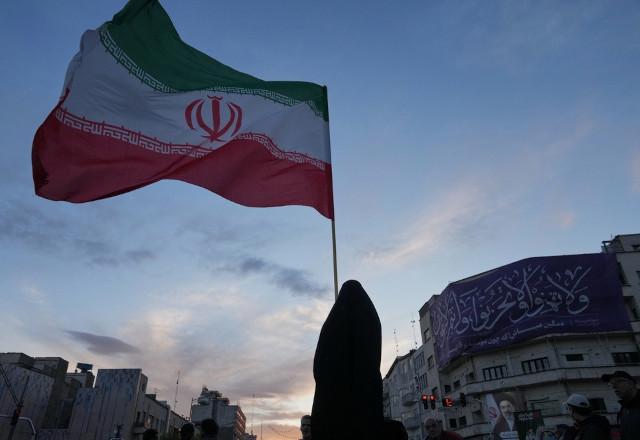
In a previous article, we summarized part of the war declared by the US and Israel against Iran and all of Western Asia. Today the conflict continues, but contrary to all predictions made by media outlets allied with imperialism, it seems that not only is the end of the war approaching, but there is a predictable loser, and it is not Iran. We find ourselves awaiting the last desperate gasps of Yankee imperialism as we know it, just before its imminent fall.
The Crisis of an Empire
Until a few years ago, the hegemony of the United States as the world’s leading empire was undeniable. The world knew it and was governed by Uncle Sam’s control and power. It’s difficult to pinpoint the exact moment the empire began to decline, but what is certain is that several factors, especially in recent years, have contributed to making its decline evident to the world. It began with the 2008 housing crisis, which severely impacted the economy, particularly the American economy; followed by the emergence of new powers that began to control parts of the market, such as China and India, and which deliberately began to meet and create joint initiatives without the participation of the American empire, such as the BRICS, to confront its economic policies and implement new agreements that would strengthen their increasingly stable economies; and of course, the crisis stemming from the scarcity of hydrocarbons has also contributed, increasingly jeopardizing the future survival of capitalist society as we know it.
More recently, the most extreme expressions of this crisis have been evident during Donald Trump’s second term, where the loss of power and control over the world has triggered an unprecedented internal crisis. Unaddressed problems such as the rise in substance abuse and dependence among a large percentage of the American population, the increase in unemployment, and the healthcare crisis have led to constant disagreement among a large segment of the population with Trump’s policies and his inaction in the face of these issues, due to his prioritization of warmongering and the persecution of immigrants. This discontent is now expressed in massive protests, with thousands of people taking to the streets of the country’s major cities for various reasons: against immigration policy, for decent working conditions and solutions to the structural problems affecting the American people, and against the wars unleashed by Trump, among others. Today, all polls reflect the regret of voters who believed Trump’s demagoguery during his campaign, yet another sign of the precipitous decline in which “the giant of the north” finds itself.
Externally, the Trump administration, contrary to the effects the American elite anticipated in supporting him, has accelerated the empire’s decline. Today, its delegitimization in the eyes of the world has become more evident, and worse still, the US bourgeois class no longer has any guarantee of the empire’s continued existence as they knew it, much less any notion of stability. Trump has reached a dead end with the war against Iran, a war that is shattering myths about the empire, such as the idea that the empire is invincible or that no one could defeat or resist a coalition between the world’s largest arms manufacturer (Israel) and the greatest military power (the US). Losing the war was an unexpected outcome according to his advisors’ calculations.
Background to the Conflict
As is well known, the United States, since the beginning of its history as a nation, has pursued a belligerent and domineering policy toward the world. It has seized territories and intervened as it pleased in the sovereignty of other nations under all sorts of pretexts: threats to national security, nuclear weapons that threaten the world, threats to democracy, among others. The real reasons for intervention are increasingly far removed from these excuses. In most cases, they relate to the control of resources, the appropriation of territories, or simply the obstruction of national projects that do not align with its policies. Iran has been no exception: the main reasons for wanting to intervene in its sovereignty have been related to the control of resources (Iran is the country with the second-largest oil reserves in the world, and also possesses large gas reserves) and the weakening of its governments and allies in the region, given their opposition to Western interests.
It is possible to create a timeline of events that demonstrate US attempts to intervene in Iran:
– 1953 During the Cold War, the US overthrew the Prime Minister of Iran and reinstated the monarchy to prevent Soviet influence in the country.
– 1979 Islamic Revolution that overthrew the monarchy; rupture of diplomatic relations between the US and Iran (1980).
– 1980 Iran-Iraq War after the US supported Saddam Hussein in his invasion of Iran.
– Consecutive attacks on bases and aircraft between Iran and the US.
– 1990-2000-2010 Periods of tension and détente mediated by the US pretext regarding Iran’s nuclear program.
– 2015 Signing of the Joint Comprehensive Plan of Action between the US and Iran. Iran agreed not to develop nuclear weapons in exchange for economic relief (lifting of sanctions and blockades). – 2018 Trump completely breaks off the agreements and imposes maximum economic pressure on Iran.
– 2021 Joint military operations begin between the US and Israel in West Asia, aimed at weakening Iran’s alliances in the region.
– Israel intensifies its offensive against Palestine, and Iran supports Hezbollah in Lebanon, Hamas in Palestine, Ansarallah in Yemen, and Bashar al-Assad’s Syria.
– 2024 Overthrow of al-Assad in Syria by jihadists sent and supported by the US and Israel.
– June 2025 Israeli attacks, supported by the US, on Iran and other countries (12 consecutive days of attacks).
Finally, between late 2025 and early 2026, the US and Israel take another step in their plan to destabilize Iran, using negotiations with the Persian country on nuclear weapons as a facade. While peaceful protests began in Iran over the country’s economic situation (caused by US sanctions), these were exploited by Israel’s Mossad and the United States. They launched digital calls to “take to the streets together” with messages of support; they also sent foreign actors to arm anti-government protesters; and they paid young people to create chaos. Thus, internal tensions were transformed into an attempt at regime change, which would obviously allow the United States to place one of its pawns in Iran to control it and exploit its resources. In the long run, this strategy also failed, triggering a somewhat more desperate measure: direct war.
Trump’s Desperation
On February 28, the United States and Israel launched a series of attacks against Iran with the prospect of initiating a short war. They believed that, coupled with internal pressures, this would cause the country to plummet and succumb to US control and dominance, while simultaneously allowing Israel to gain more territory and become the dominant power in West Asia. US advisors believed that by assassinating key Iranian leaders, they would find a country that would quickly yield to their demands, just as Trump had done with Venezuela and Iraq in the past. However, far from yielding, Iran immediately responded to each attack, declaring war on all US military bases and influence in the Persian Gulf countries, launching attacks against strategic Israeli targets, and, most decisively, declaring the permanent closure of the Strait of Hormuz, the waterway through which 20% of the world’s oil passes, severely impacting the global economy.
During these 40 days since the conflict began, several things have become evident: a. Not only has the Iranian government resisted and overcome the war waged by the US and Israel, but the people have also fiercely fought these attacks, fully supporting the decisions made by their leaders and thus overcoming the internal crisis that had been fueled by Israeli infiltrations into the country; b. The US strategy has fallen far short of its intended effect, and on the contrary, each blow has been met with a resounding response; c. Iran has employed a war of attrition strategy against the enemy and has remained steadfast in refusing to yield to pressure; d. Other countries allied with Iran, although also targeted by the US and Israel, have remained firm and resistant to the enemy, as is the case with Lebanon and Ansarallah in Yemen; and e. If there is a potential loser in this war, the ball is currently in Iran’s court, meaning the US and Israel would be the ones eliminated.
Given this situation, Trump has already begun to show signs of desperation. Before the media, the President of the United States has behaved arrogantly and provocatively; in some statements, he has come across as imposing, speaking of his imminent victory in the war, and has gone so far as to issue ultimatums to Iran demanding the opening of the Strait of Hormuz (given the severe economic damage felt especially by the United States), constantly threatening the complete destruction of Iran. These ultimatums and threats have had no effect on an Iran that responds each time and is prepared to go to the bitter end to defend its dignity. Furthermore, Trump’s pleas for help to European countries, particularly those belonging to NATO, have also been ineffective, as they have chosen to look the other way because they know that this is a war that would entail more losses than gains.
The negotiations announced for April 10th only reveal a defeated Uncle Sam, left with no choice but to yield to Iran’s numerous demands. In other circumstances, these demands would have represented a humiliation to which the empire would never submit, but today it does. Among the points included are reparations to Iran for the attacks it instigated, as well as new conditions for the Strait of Hormuz to which the US must also submit. Also included is a free hand for Iran to continue supporting militias in other countries not aligned with Western policy and to revive its nuclear program. Finally, the lifting of all economic sanctions imposed by the US is also included. It is clear that today’s negotiations come at a different price, and that the empire is collapsing under the weight of its lies and the narcissism that characterizes it.
In conclusion:
The Iranian resistance, and that of the rest of West Asia, is a beacon of hope for the peoples of the world who resist imperialism. While this is certainly not the definitive defeat of imperialism, it does represent a reconfiguration of the world order and demonstrates that it is possible to fight and resist, that there is no invincible enemy, and that the struggle of the people is just. We also know that, anticipating its fall, imperialism is reinforcing its dominion and control in Our America to remain standing at all costs. Centuries of domination over this continent, which they now seek to strengthen, but which we have also resisted throughout the history of struggle of our peoples. Today we know that the enemy is powerful, but that it also has great weaknesses. The example of the Iranian people can only inspire us to fight, to liberate ourselves from the yoke imposed by the Yankees. This is the moment for the peoples of the world, the moment to liberate ourselves or die trying.
By: Octavia Rebelde, Antorcha correspondent