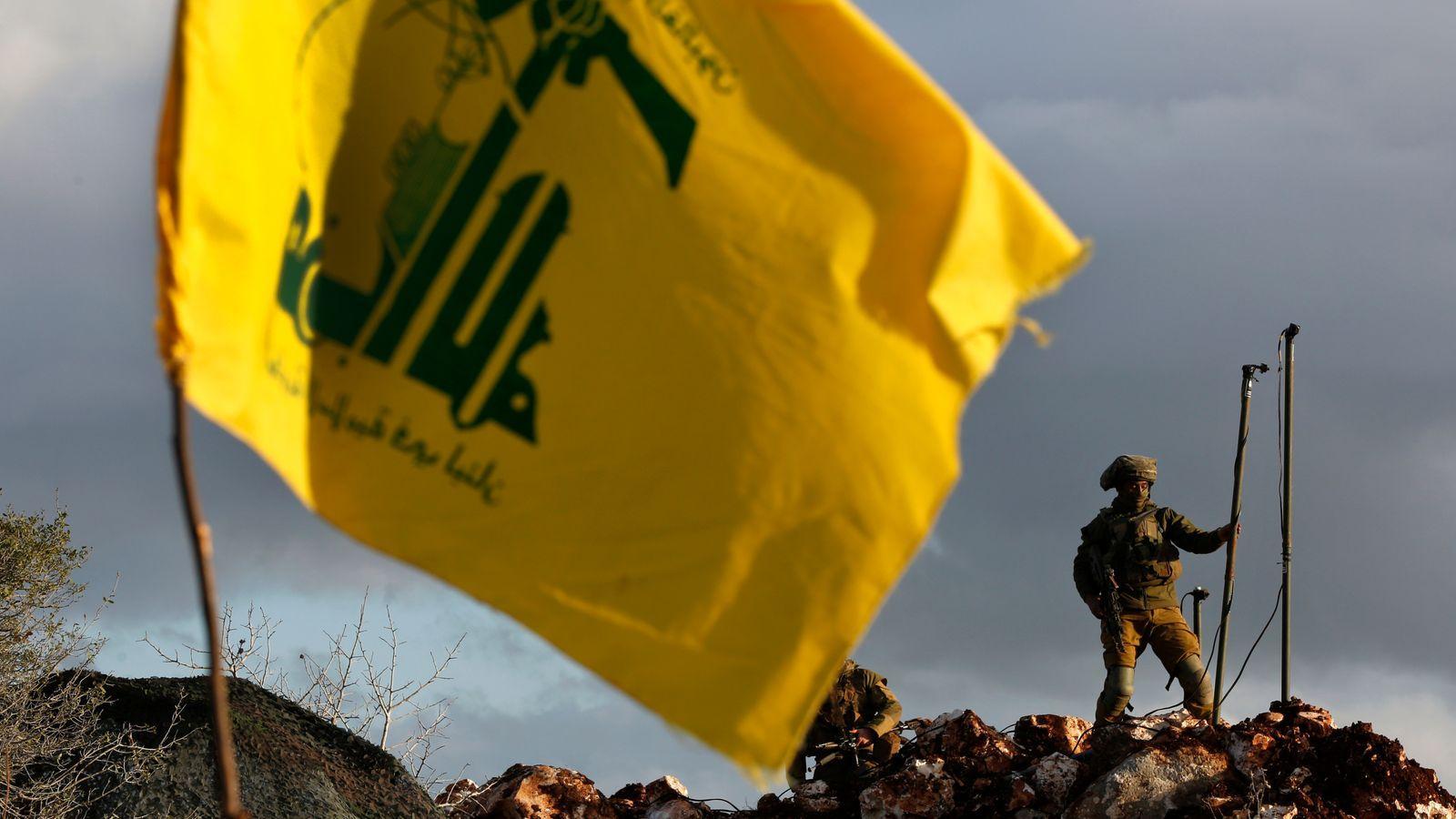
The Lebanese Resistance, Hezbollah, carried out a series of operations on Wednesday evening targeting occupation forces and military assets across southern Lebanon, in direct response to continued violations of a ceasefire arrangement.
At approximately 18:00 local time, Resistance fighters deployed an attack drone against a command-level Hummer vehicle belonging to the zionist occupation forces in the town of al-Qantara, achieving a confirmed direct hit. The operation was described as a response to earlier attacks targeting the southern town of al-Tiri.
In a parallel operation, the Resistance struck a gathering of zionist soldiers in the same area using another attack drone. The action came following a zionist drone strike on the town of Yahmar al-Shaqif, underscoring the reciprocal nature of the escalation.
Escalation amid continued ceasefire violations
The Resistance also announced the downing of four zionist reconnaissance drones over the town of al-Mansouri at the same hour, citing ongoing violations of Lebanese airspace.
Earlier in the day, Resistance forces targeted a newly established artillery position used by the occupation army in al-Bayyada. This strike was framed as retaliation for the continued shelling of southern Lebanese villages.
Military media affiliated with the Resistance further released footage from an earlier operation on April 4, documenting the targeting of a zionist Merkava tank in al-Bayyada using an attack drone. The footage reinforced claims of sustained operational capability and precision targeting.
Civilian toll and targeting of journalists
Zionist attacks across southern Lebanon resulted in civilian casualties, including the killing of two individuals in al-Tayri after a vehicle was struck. In a subsequent air raid on the same town, journalists Amal Khalil and Zeinab Faraj were wounded.
Reports indicated that occupation forces obstructed ambulance access to the targeted area, delaying evacuation efforts. The Lebanese Red Cross was eventually able to transport Zeinab Faraj, while search operations for Amal Khalil continued amid reported interference.
In Yahmar al-Shaqif, an Israeli drone strike killed two people and injured two others, according to Lebanon’s Ministry of Health.
Leadership response and deterrence posture
The escalation comes as Israeli forces continue to violate a temporary ceasefire declared on April 17 for a period of 10 days. These violations have exceeded the 200 count and included repeated attacks on southern villages and persistent aerial incursions by reconnaissance and combat drones.
Hezbollah Secretary-General Sheikh Naim Qassem emphasized that a ceasefire “means a complete halt to all hostile actions,” warning that the Resistance remains on high alert. He stated that fighters “do not trust the enemy” and are prepared to respond decisively to any further violations.
IRGC targets ships
Iran’s Islamic Revolution Guards Corps (IRGC) said it has seized two cargo vessels near the Strait of Hormuz, just hours after US President Donald Trump announced a unilateral an extension of a ceasefire agreement.
Iranian state media reported that the IRGC Navy detained the container ships MSC Francesca and Epaminondas on Wednesday, saying the vessels were intercepted after attempting to navigate “without the necessary permits.” The force said it was directing the ships toward Iran’s coast and warned that “disrupting the order and security of the Strait of Hormuz is our red line,” according to a statement carried by the Tasnim News Agency.
Earlier in the day, the UK Maritime Trade Operations (UKMTO) reported that two commercial ships had been stopped near the strait, including one incident involving a gunboat linked to the Revolution Guard Corps. Iranian media later confirmed that the IRGC had targeted and “immobilized” the vessels before taking control.
Trump extends ceasefire
Trump announced late Tuesday that the ceasefire would be extended, saying the decision followed a request from Pakistan, which is mediating between the parties. He added that the truce would remain in place until Iran’s “leaders and representatives can come up with a unified proposal.”
However, tensions remain high. The United States has continued its restrictions on vessels traveling to and from Iranian ports, a policy Tehran has described as “an act of war.”
Iranian Foreign Ministry spokesman Esmaeil Baghaei said Wednesday that Iran remains ready to defend itself militarily while still leaving the door open to diplomacy.
He said Iran would engage in negotiations “whenever we conclude that the necessary and rational conditions exist to use this tool to achieve national interests,” according to the official IRNA news agency.
Context: IRGC says Strait of Hormuz closed until US blockade lifted
On April 18, the IRGC announced that the Strait of Hormuz would be closed starting this evening, citing continued violations related to a ceasefire arrangement.
In a statement, the IRGC said several vessels had transited the waterway a day earlier, but stressed the United States had not lifted a naval blockade on Iranian ships and ports.
“Therefore, from this evening, the Strait of Hormuz will be closed until this blockade is lifted,” the statement said.
The IRGC warned that vessels should remain at anchorage in the Gulf and the Sea of Oman, adding that any movement toward the strait would be viewed as cooperation with an adversary.
“We warn that no vessel should move from its anchorage in the Persian Gulf and the Sea of Oman, and approaching the Strait of Hormuz will be considered cooperation with the enemy, and the violating vessel will be targeted,” the statement continued.