From foreign-backed ambushes to French-orchestrated destabilization, this analysis exposes how imperialism weaponizes minority struggles to fracture the Sahel — and why only Pan‑African unity can defy a new scramble for Africa.
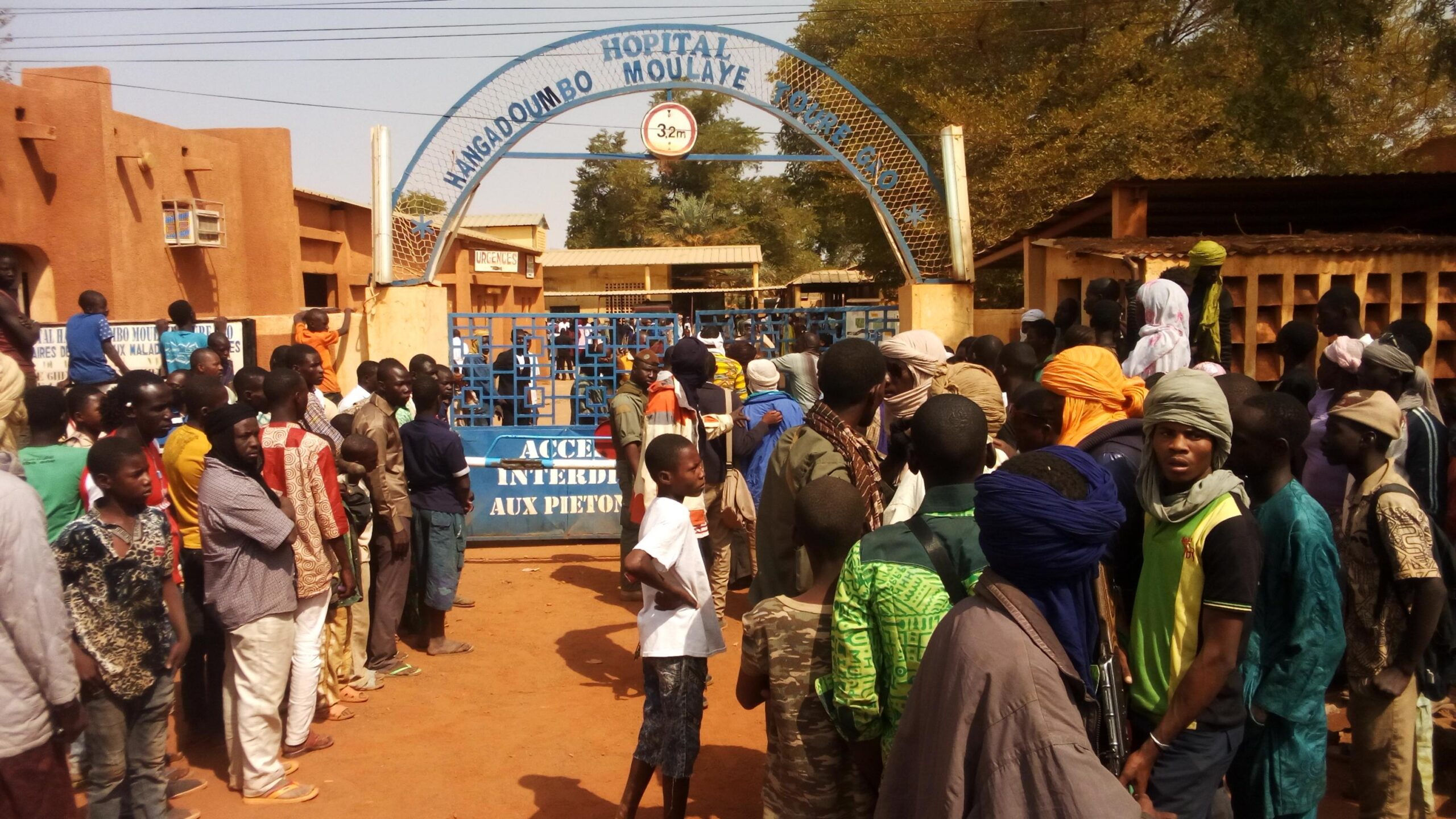
Around two years ago, precisely July 27, 2024, armed Tuareg militants conducted a wide attack on northern Mali, killing a score of Malian armed forces stationed in the unstable region. While that attack, if framed within a closed national framework, can be presented as an internal matter between the Tuareg minority and the rulers in Bamako, it does not clearly paint the full picture of the nature of that uptick in violence, who conducted it, why specifically Mali, and why at this conjuncture.
Again, in 2026 April 25, another attack, bigger in scale, was unleashed in:
- Kidal, 1500km northwest of the capital, Bamako,arguably the largest military outpost of the Malian Armed Forces in the region neighboring Algeria
- Gao, 1200km northeast of the capital, key area in the node of logistics and transport
- Sevare, 600km east of the capital, similar to Gao, key node
- Kati, 25km northwest of the capital, which saw the killing of the Defense Minister of Mali, Sadio Camara, after suffering injuries from a suicide bombing and clashes with the militants, coinciding with an attack on the international airport in the capital region
The Transitional Government of Mali issued a statement, stating:
“The Transition Government of Mali deeply regrets to inform the public of the tragic death of Corps Army General Sadio CAMARA, Minister of State, Minister of Defense and Veterans Affairs. Indeed, following the cowardly terrorist incidents that occurred on the morning of April 25, 2026, a vehicle-borne improvised explosive device driven by a suicide bomber targeted the residence of the said Minister. He exchanged fire with the attackers, managing to neutralize some of them. During intense fighting, he was wounded, then taken to the hospital, where he unfortunately succumbed to his injuries. Furthermore, the collapse of his residence caused other casualties and the destruction of a nearby mosque, leading to the death of several worshippers who were inside.”[1]
Meanwhile, the president of the Alliance of the Sahel State (Alliance des États du Sahel — AES) released a communique that read:
“The coordination of the attacks, the targets chosen, the number of operatives involved in the atrocity, as well as the logistics and weapons used, clearly indicate that these were long-planned and coordinated actions aimed at inflicting heavy losses on the defense and security forces and sowing terror among the innocent civilian populations of the Confederation of Sahel States and particularly of Mali. The persistence of these barbaric and inhuman aggressions bears the signature of a monstrous conspiracy supported by enemies of the Sahel’s liberation struggle being waged through the confederal dynamic of the AES.”[2]
While much of the attack in Gao, Kati, Sevare and rest of Mali has been stifled by the Malian armed forces (alongside technical help from Russia’s African Corps), the fog of the attack carries the same hallmarks of its predecessor — an internationally coordinated, locally implemented operation meant to destabilize the Alliance of Sahel States project.
Since 2011, the region of Sahel and the larger Sahara has seen unending burgeoning instability. Following the destruction of Libya and the overflow of millions of weapons to NATO-backed rebels meant to overthrow the government, these very weapons that were somehow meant to promote democracy in Libya have trickled down to the south and the string of violence expanded in the swaths of the Sahara. Chad, Niger, Mali, Burkina Faso and many other countries carried the brunt of the ramifications of imperialism. These events are not stochastic, they are, in fact, conspired primarily by France, who is losing its stronghold on its former colonies due to the growing alliances between northern Africa and the Sahel states. Lest we forget, Hillary Clinton’s 2011 emails clearly stated that France’s push to intervene in Libya in 2011 was to stifle Libya’s Pan-Africanism and supplant the plans for the African Golden Dinar.[3] Further, France wanted to reassert its military presence in the region. One way to do that was to destabilize the region and present itself as its savior through its intervention.
A decade of French military activities in the Sahel has only strengthened the very armed terrorist groups (Al-Qaeda, Jama’at Nusrat Alislam wa Almuslimin ‘JNIM’, and Islamic State) that it was allegedly fighting, a testament to the failure of Operation Barkhane and its daily cost of 1 million Euros.[4] The masses and the military leaderships in the region swiftly rejected these dysfunctional alliances with the very country that colonized them and allegedly is acting as their savior. Mali, Burkina Faso, and Niger had popular uprisings that resulted in coups that overthrew the former neocolonial leaders and sought to create a new vision between the three countries. The Alliance of the Sahel State, comprising these three states, kicked French troops out of the country, closed American military bases, and formed the alliance that is seeking independence while forming close alliance with an alternative pole (China and Russia). The Alliance, currently led by Captain Ibrahim Traore of Burkina Faso, strives to be an economic, military, and political alliance between the three states, since they face the same history, the same fate.[5]
Given what this Alliance represents to the rest of Africa (potential hope for more African unity), to the neocolonial leaders, puppets of the West (who protect the West’s interests, while being protected by the West — as was seen in December 2025 in Benin),[6] to the West that seeks to keep much of the continent, especially Western Africa region in a cycle of extractive dependency, it is being targeted by France and its puppets in the region. In 2023, ECOWAS planned to attack Niger to reinstate its deposed president, Muhammed Bazoum, but Burkina Faso and Mali coalesced their forces and began a defensive pact, an attack on one is an attack on all, warranting collective response. Now the AES, formalizing its integration into a unit since 2024,[7] has been targeted not only by neocolonial rulers of Africa, but from Ukraine, France, and their local functionaries.
The attack on Mali in 2024 was orchestrated by Ukraine. As we have shown two years ago,[8] the 2024 attack targeted a military convoy in northern Mali (Tinzawaten), close to the border with Algeria. The ambush resulted in the deaths of a significant number of Malian soldiers and their companions from the Wagner Group, a Russian private military company. Since this strike targeted one of Russia’s partners in the Sahel, Western media outlets eagerly sensationalized the violence, treating it as something to celebrate. More notably, Ukraine joined in applauding the bloodshed, with a Facebook post from its embassy in Dakar claiming that Kyiv had provided intelligence, information, and military backing to Tuareg militants. This claim was spread to portray Ukraine as capable of hitting Russia and its interests anywhere, framing it as part of an effort to globalize their reactionary, NATO-backed struggle for so‑called ‘democracy.’[9] In response, Mali and Burkina Faso cut diplomatic ties with Ukraine,[10] while Senegal summoned Ukraine’s ambassador for glorifying violence and fostering hostility within Mali.[11] Following the backlash, Ukraine’s Facebook post has since been removed.[12]
The 2024 attacks carry the same hallmarks as the one that unfolded in 2026. An indigenous group, the Tuareg, who have resided for centuries across Algeria, Burkina Faso, Libya, Mali, Mauritania, Morocco and Niger, picked up arms and began calling for self-determination and independence. This became a strong, western-backed demand after the formation of the AES. In other words, minorities in Africa, with real grievances emerging from the capitalist integration of their national economies, are often weaponized for imperialist purposes. First, the imperialist West manipulates minority issues to serve its own interests. In some situations, it invokes territorial integrity—such as with the Basque Country and Catalonia in Spain, Crimea and Donetsk in Ukraine, Western Sahara in Morocco, or Ossetia in Georgia—while in others, it aggressively advocates for self-determination—as seen with Kosovo, Tigray, Bosnia, and Taiwan. Palestine, of course, is consistently framed as a mere conflict, never as a matter of self-determination or national liberation. This selective use of terminology exposes the double standards that characterize imperialist diplomacy and practice. Second, the drive to further fragment the African continent—already carved up since the 1884 Berlin Conference—will not bring more sovereignty, economic decoupling, or genuine anti-imperialism (South Sudan is an example). In fact, if self-determination were applied without bias, the West would have recognized Catalonia’s 2017 referendum and imposed sanctions on Spain’s reactionary monarchy for denying Catalans their independence.
Instead, this approach serves as just one of many tools that Western imperialism uses to weaken the national sovereignty of countries in the Global South. Whenever there is a need or desire to further divide and carve up the African continent—and the broader Global South—the minority question is exploited to render targeted nations compliant and more dependent economically, politically, and in terms of security. In this way, the imperialist West (in this case France) co-opts the legitimate struggles for equality and justice that minorities in the Global South pursue, transforming them into a Trojan horse for imperialism. In other words, the minority issue is manipulated to infiltrate Global South countries and undermine their national sovereignty, ultimately benefiting the expansion of imperialist capital.
AES represents more than a stumbling block but a falling domino for French imperialism in the region. Beyond the rhetorics of Pan-Africanism espoused by the AES, materially, it has leveraged its wealth to transfer technology, indigenize development and redistribute land through the collaboration with the alternative pole.[13] The fact that Niger supplies Uranium to France to supply the latter with its energy needs while Niger’s population largely remains without electricity is one of the many contradictions that the AES is striving to address. France likely sees this project as a threat, and it will employ all of its tools to fight it. Just days before the attack, France 24 broadcast an exclusive clip of Omar Mariko, an exiled Malian opposition politician, in which he was shown sitting with Malian army hostages held by Al-Qaeda, calling on the Assimi Goïta government to negotiate and to tone down its hostile rhetoric toward France and the West in order to achieve peace in the country.[14] Such recordings often come via media intermediaries, including a man named Wassim Nasr, who maintains contact with Al-Qaeda elements and other armed groups in the Sahel region – which keeps him the permanent guest and the only “specialist” on Sahel affairs on the channel. As for Omar Mariko – no one knows exactly how he managed to reach these groups’ locations so easily – he was once seen as one of Mali’s most prominent Marxists. For years, he was subjected to smear campaigns in French media, portrayed as an extremist populist, an unprincipled opportunist, a political charlatan. Today, he is being reintroduced by some of those same media outlets as a “distinguished opposition figure” – reflecting the shift in his position and the role he now plays. A tale of how local actors can give legitimacy to foreign intervention, thereby being functionaries of imperialism.
The objective these organizations seek from this attack is to impose their control over the northern regions, and from there to weaken and bleed Mali through high-impact operations – because they lack the ability to penetrate the capital and overthrow the government, which also serves France’s interests. There are doubts about their capacity to hold fixed, stable positions such as the city of Kidal over the long term. For now, they are benefiting from a state of security confusion resulting from the Malian army being caught off guard, including the Russian Africa Corps withdrawal from Kidal.[15] Despite all this, they have suffered notable losses and were forced to withdraw from major cities like Gao after having controlled them for just a few hours. These groups – chief among them JNIM, affiliated with Al-Qaeda – tend toward a strategy of long‑range attrition. Over the past year, they have used this pattern to target fuel tankers and block the main roads used by trucks to transport fuel from Senegal and Ivory Coast to Mali. For weeks, most Bamako residents could not buy fuel for cars or motorcycles, and some neighborhoods experienced power cuts after supplies ran out, leading to near‑total paralysis in the normally crowded and vibrant capital.[16] This approach is fundamentally aimed at weakening public confidence in the state, stirring popular anger against the authorities, thereby creating mounting pressure and exacerbating instability.
With the 2024 Ukraine-backed attack and the 2026 French supported offence, there is a need to have a larger understanding of what is happening to the African continent, especially and the Sahel and Saharan states. The French offensive is also diplomatic (economic and political), as France is cohering the Africa Forward Summit: Africa-France Partnership for Innovation and Growth being held in Nairobi, Kenya, between 11-12 May 2026 (a local effort is being organized by anti-imperialist activists and groups, Pan-Africanism Summit Against Imperialism: Counter-summit to the “Africa Forward” France–Africa Summit).[17] The continent, as it faces underdevelopment coupled with imperialist expansion, there is a growing trend for mercenaries to act as soldiers in larger geopolitical battles. Just last month, a Russian gas vessel travelling through the Mediterranean was targeted off the coast of Libya[18] by presumably Ukrainian mercenaries.[19] Despite the ecological catastrophe this act harbors, just like the blowing up of the NordStream pipeline, it speaks to the growing network of unspoken terrorism done by the Global North in African territories. Further, it speaks to how far the blind support to Ukraine by their European counterparts will go even if it expanded the Donbas front to Africa. The only way to fight the unity of the enemy is to advance African unity, militarily, economically and politically. Otherwise, the continent will be balkanized and chopped into smaller pieces for the imperialists to chew on.
Kribsoo Diallo is a Cairo-based Pan-Africanist researcher in political science related to African affairs. He has written for many African magazines and newspapers, and Diallo has contributed to translated editions of papers and articles in Arabic and English for several research centres within the African continent. Twitter: https://x.com/nyeusi_waasi
Essam Abdelrasul Bubaker Elkorghli (PhD) is a Libyan researcher focusing, inter alia, on imperialism, ideology and education primarily in Libya. He serves on the International Advisory Board of Pambazuka News, as assistant editor to the Middle East Critique Journal, and member of the Global Pan-African Movement. He writes frequently for the Black Agenda Report. He can be followed on Twitter here (https://x.com/elkorgle)
Endnotes
[13]https://english.almayadeen.net/news/Economy/mali-looks-into-using-russia-s-mir-cards–malian-official;https://english.almayadeen.net/news/Economy/russia–mali-launch-construction-of-largest-solar-plant-in-w
[14]https://www.france24.com/ar/%D9%81%D9%8A%D8%AF%D9%8A%D9%88/20260423-%D9%85%D8%A7%D9%84%D9%8A-%D8%A7%D9%84%D9%85%D8%B9%D8%A7%D8%B1%D8%B6-%D8%A7%D9%84%D8%B3%D9%8A%D8%A7%D8%B3%D9%8A-%D8%B9%D9%85%D8%B1-%D9%85%D8%A7%D8%B1%D9%8A%D9%83%D9%88-%D9%8A%D9%84%D8%AA%D9%82%D9%8A-%D8%AC%D9%85%D8%A7%D8%B9%D8%A9-%D9%86%D8%B5%D8%B1%D8%A9-%D8%A7%D9%84%D8%A5%D8%B3%D9%84%D8%A7%D9%85-%D9%88%D8%A7%D9%84%D9%85%D8%B3%D9%84%D9%85%D9%8A%D9%86