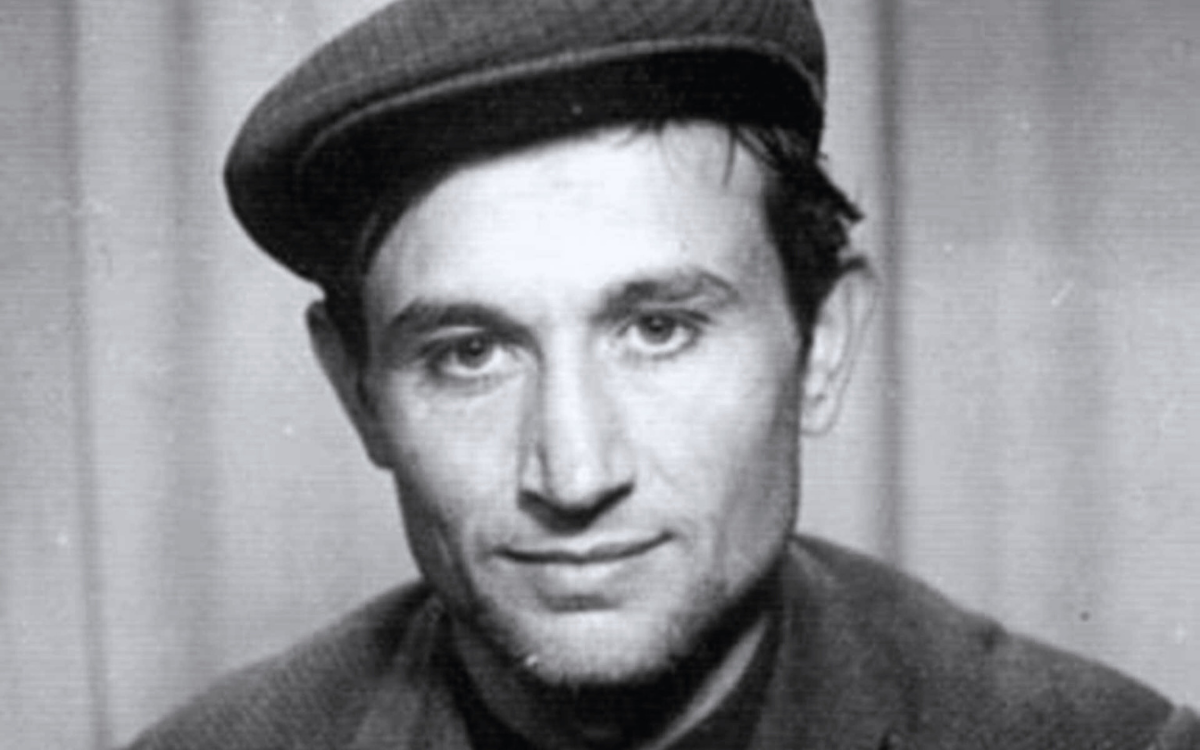
We Have Not Forgotten May 18, And We Will Not Let It Be Forgotten!
It has been 53 years since the assassination of the communist leader İbrahim Kaypakkaya. This period of time—long for a human life but short for societies—has validated a significant portion of the theses İbrahim Kaypakkaya put forward. The class struggle and social practice have more than sufficiently confirmed the views he defended as a young communist leader. History has proven İbrahim Kaypakkaya right. As his successors, we continue to draw inspiration from his struggle and expand his legacy by internalizing his stance toward life—the very stance that enabled him to create miracles.
The 1960s and ’70s were years when political, social, and national liberation struggles developed and intensified, both globally and in our country. The momentum gained in ’68 had, by the time the ’70s arrived, undergone a qualitative leap within the framework of political struggle; the tools, methods, and paths of political struggle underwent a radical transformation. The youth’s struggle merged and developed with the spontaneous actions of the working class, peasant masses, and the laboring people as a whole.
The “1971 Armed Revolutionary Uprising” was a revolutionary breakthrough resulting from this new search for and understanding of political struggle, and it took place under conditions where fascist attacks were intensifying. In this sense, the ’71 uprising was the culmination of the anti-imperialist, anti -fascist struggle of the youth—characterized as the “’68 Generation”—which began in the ’60s, the working class’s June 15–16 Resistance and increasing strikes, peasant actions, and the world-shaking impact of the Great Proletarian Cultural Revolution—all converged to shatter the reformist line that had become dominant following the massacre of the Mustafa Suphi group. This makes the ’71 Uprising a significant milestone in the history of the Turkish revolution. İbrahim Kaypakkaya was the communist face of this uprising.
One of the key factors distinguishing Kaypakkaya from his contemporaries was the lessons he drew from the developing working-class struggle, particularly the Great Workers’ Resistance of June 15–16. Drawing on the experience of this resistance, he clearly demonstrated that the struggle for power would succeed not through reformist or parliamentary means, but by organizing the struggle of the masses. Kaypakkaya did not advocate for the “revolution” (!) of a handful of intellectuals and the “vital forces” of the army that were in vogue at the time, but rather for a revolution led by the working class, grounded in the peasantry, requiring the participation of the masses, and led by the Communist Party.
In this sense, Kaypakkaya is not a “peasant revolutionary,” as he has often and mistakenly been portrayed in propaganda. He emphasized the vanguard and leading role of the working class in the revolution and defended a line of armed struggle based on the fundamental worker-peasant alliance under the leadership of the working class. This was one of the defining points that distinguished Kaypakkaya from other revolutionary leaders of the time.
Another key point distinguishing Kaypakkaya from other revolutionary leaders of the time is his approach to the Great Proletarian Cultural Revolution (GPCR). Kaypakkaya took a stand in favor of the GPCR, which was a decisive development for the International Communist Movement of his era. He adapted the universal lessons of the GPCR to the practice of class struggle in our region; he concretized this by stating, “Our Movement is a product of the GPCR.”
Kaypakkaya clearly declared his stance in the international arena regarding the polarization within the communist movement between Marxism-Leninism-Maoism and modern revisionism. Furthermore, in this ideological struggle, he achieved a definitive break by taking a firm stance against the revisionism and reformism entrenched within the TKP, fighting these ideologies on the basis of MLM, and by founding the TKP-ML, he raised the banner of communism. This point is crucial for understanding Kaypakkaya’s role within the TDH. His fundamental understanding and orientation during this process were characterized by a clear stance against revisionism, the exposure of the true nature of Kemalism, a clear position and analysis regarding the national question/Kurdish national question, and a clear stance on issues such as state analysis and armed struggle.
Theory Derived From The Practice of Class Struggle
The fact that the views Kaypakkaya put forward remain relevant today is directly linked to his approach to the struggle of the masses. Kaypakkaya was never a “desk-bound revolutionary”; he immersed himself in the masses’ class struggle practice at every opportunity. He was able to synthesize the lessons and experiences gained from these practices with the science of MLM, the most advanced science of our era.
From this perspective, we can confidently state that Kaypakkaya’s theses were shaped within the practice of the masses’ class struggle; as he learned from the masses’ practice, he synthesized these experiences with the MLM science. His revolutionary method has ensured that his theses continue to live and exist within the practice of the masses’ class struggle even today.
For example, his revolutionary work in the Kurdish provinces led him to advance his theses on the “National Question” specifically regarding the Kurdish national issue; subsequent social practice and the development of the Kurdish national movement have confirmed the importance of these theses. Kaypakkaya’s approach to the national question—not from the perspective of the oppressor or oppressed nation, but from the standpoint of the proletariat’s class interests—has led to a clear demarcation among those who identify as communists or define themselves as revolutionaries under today’s conditions.
A similar situation applies to the evaluation of Kemalism—the official ideology of the Turkish ruling classes—the definition of the Turkish state apparatus, the leadership of the Communist Party, the path and methods of the revolution, and all other such decisive issues.
He approached every contradiction in line with the interests of the working class and the toiling masses. It can and must be said that, under today’s conditions, the criterion for being a communist should be evaluated based on one’s approach to İbrahim Kaypakkaya’s theses. Because his theses were distilled from the actions and practices of the masses within the class struggles of our region.
His ideological development and the process of concretizing MLM science in our country—beginning with his involvement in mass struggles within the TİP (Turkish Workers’ Party) ranks, particularly among the student youth; the intense questioning of the ideology guiding the TİP while he was in those ranks; his subsequent break with parliamentarism and reformism; his alignment with the National Democratic Revolution ranks; and his critical approach to and break from that ideology; followed by the clarification of the role of the masses in the revolution and his alignment with the ranks of the Proletarian Revolutionary Enlightenment, his subsequent break with the Dawn Revisionists—the successors of this movement—as a result of his critical analysis, and finally, the presentation of his programmatic theses, all of which can be summarized as the MLM period.
As can be understood from this, Kaypakkaya carried out a continuous break with the MLM direction in the practical, political struggle within the ideology of the working class, the proletariat; he “discarded the stale and embraced the fresh,” condemning the forms that bourgeois ideology had taken while breaking with the past, and advanced continuously through intense struggle. This is the meaning of his being the communist face of the Revolutionary movement of Turkey.
Don’t Forget May 18!
İbrahim Kaypakkaya’s differences are strikingly clear and systematic. In the struggle between right and wrong, discarding what is wrong and erroneous and replacing it with what is right; concretizing this in the next practical orientation; the ability to bring potential, dynamics, and power to the fore; a practice of work and organization rooted in deep trust in the masses and a firm belief that the revolution will be the work of the masses.
All of these are of such value and importance that they will serve as our compass in every revolutionary practice, large or small, carried out under today’s conditions. The fundamental aim of all these revolutionary efforts is to reach, organize, and build broader masses by adopting Kaypakkaya’s revolutionary method.
The process we are going through necessitates the task of defending Kaypakkaya’s revolutionary line against revisionism, all forms of reformism, and parliamentary illusions, and of forging a revolutionary communist line within the masses. As preparations for a new imperialist war of partition accelerate, as the Turkish ruling classes reposition themselves through NATO meetings in anticipation of this war, and as the “expiration” of armed struggle is declared, and under conditions where every revolutionary resistance hub is being targeted for elimination under the banner of “Turkey Without Terror,” our compass must be the Kaypakkaya line, and our practical orientation must be the revolutionary tasks of the moment!
Wherever we are, whatever revolutionary work we undertake, our motto must be: “Do Not Forget May 18!”
In the words of our Leader, “for a tighter, stronger, and more resolute struggle”, with his boldness and courage, let us fan the flames of rebellion wherever the working masses stand against imperialist wars, exploitation, and poverty!
İbrahim Kaypakkaya Is Immortal!
Long Live Our Party TKP-ML, TİKKO, KKB, TMLGB
Long Live Marxism-Leninism-Maoism!
TKP-ML Central Committee
May 2026
Source : https://www.tkpml.com/tkp-ml-central-committee-ibrahim-kaypakkaya-is-our-compass/