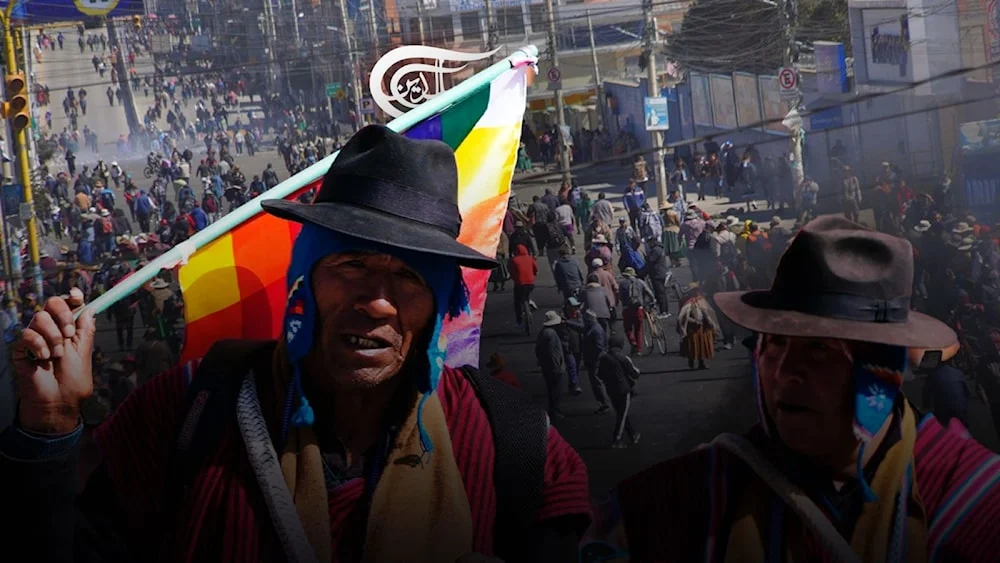
There are thousands and thousands who run through the streets of La Paz waving wilphalas and shouting: “let him go” referring to the lackey president of Donald Trump’s directives, the right-wing Rodrigo Paz. In six months of bad government, the Bolivian people, who do not know what possibilism and the lying “give it time” are, have marched, blocked the main roads and demonstrated to the rest of the peoples of the continent that insurrections, when there is a just cause, work.
It is essential, when analyzing this Bolivian uprising against the established power, to take into account the long history of frustrations, mistreatment, surrenderist policies and coups d’état that have been unleashed for years against the most humble. It is worth remembering that Bolivia is one of the Latin American countries that still preserves the most strongholds of slavery, almost going back to the Middle Ages, and that a large part of those sites that were denounced and intervened during the government of Evo Morales, belong mostly to those corrupt businessmen who, both in Santa Cruz and Beni, or Tarija, speak out today for the “sustaining of the democratic order.”
For the Bolivian bourgeoisie, accustomed to imposing its policies of dispossession at the point of bullets and imprisonment of those they consider “wayward”, what is happening today in the country frightens and unnerves them, since with the racist definitions that they do not shy away from disguising, they think, they are convinced, like their predecessors the Spanish conquistadors, that “the Indians” are not worthy of being included in “their” white societies, with the influence of the Nazi Croats who at the end of the war decided to populate some areas of the country and build fiefdoms where discrimination is commonplace.
Hence this insurrection, born out of rebellion against a law, the 1720 land law, which allowed small agricultural property to be converted into medium-sized ones to be used as collateral for bank loans. That is, concentrating the lands in the few hands of the usual people, who do not even use them to produce but to generate large estates.
That was the trigger, there arose the first protests that grew, despite the fact that the government of Rodrigo Paz decided to repeal the law, but immediately its political supporters and businessmen did not hide their displeasure, and what should be resolved with urgent agrarian legislation began to be shelved. Added to this is the lack of fuel, which has been dragging on since the time when the former president and now imprisoned, Luis Arce, governed. These two elements lit the fuse, and the peasant and indigenous people, plus a call from the Bolivian Workers’ Central (COB), determined that the first blockades and a national strike for an indefinite period would begin.
It is then that the important roads began to be filled, as usually happens in these cases, with large stones, cement blocks, and garbage containers, and the barricades began to burn. Day and night, with well-organized vigils by the communities, enduring intense cold, but with the morale intact of those who know what they are fighting for, the Bolivian map began to be dyed with the multiple colors of the men’s ponchos and the women’s skirts, inevitable and hard as steel at the time of the fight.
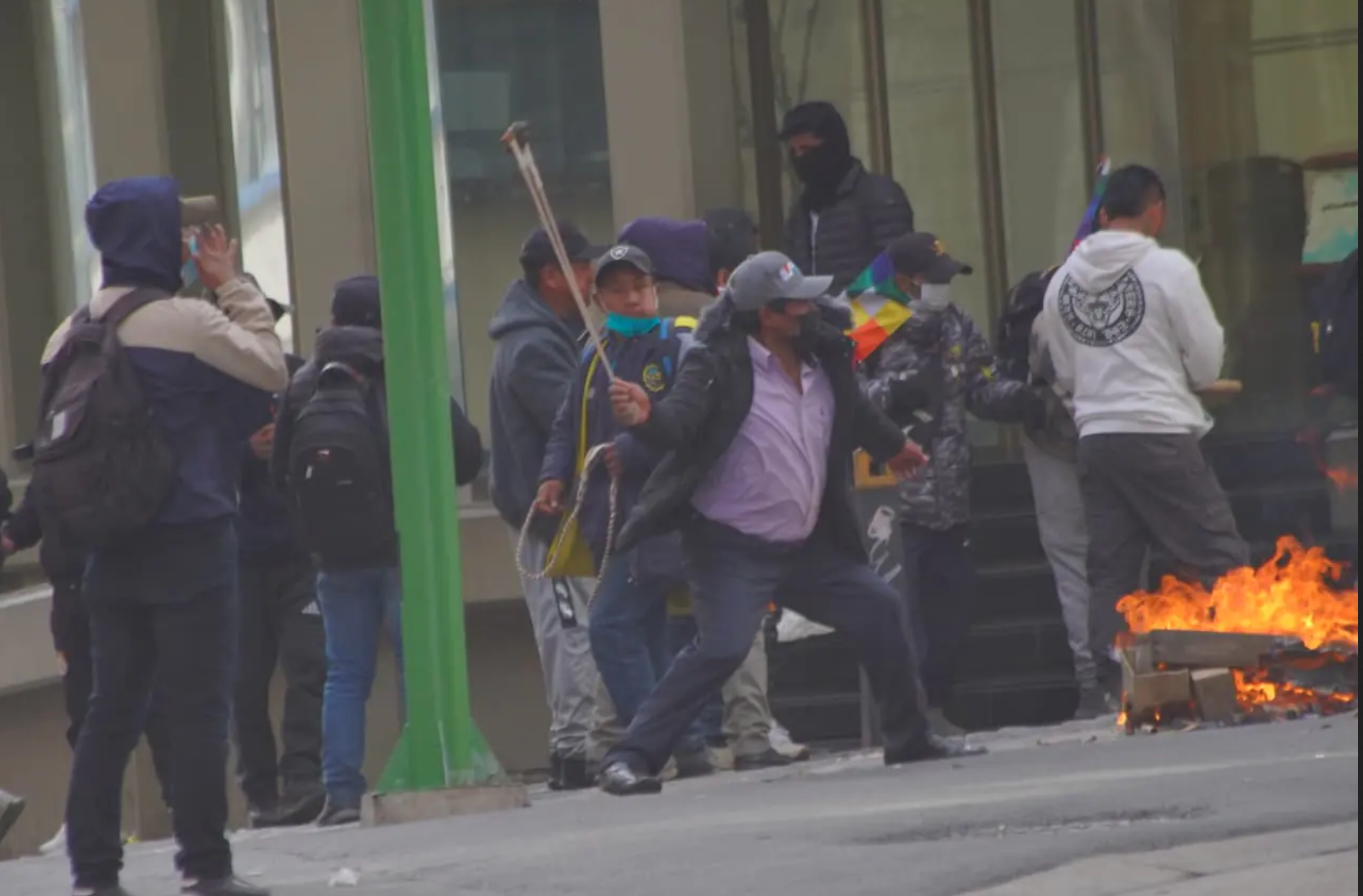
Rodrigo Paz, like every scared bourgeois, could not think of any other idea than to take the soldiers out onto the streets and start shooting indiscriminately. It is enough to watch the videos that show drunk captains, in campaign uniforms, haranguing a troop full of faces as indigenous as those they would repress hours later, and tell them that “for the country we are going to teach these filthy people a lesson.” But, the feints of imposing “discipline” with sword and fire were not enough, nor were the four peasants who were murdered, to stop what at this point is a new Fuenteovejuna. For each bullet fired, thousands of stones, Molotov cocktails, sticks and whatever was at hand were returned to those “warriors” of capitalism. There are epic scenes, where hundreds of “red ponchos” break the police cordon protected by fences, and make the uniformed officers flee, even disarming several of them.
Then, as always happens, the “fire extinguishers” on duty appear, the racist and pre-conciliar Church, the (in)Ombudsmen, and the well-known NGOs who maintain that it is necessary to “dialogue”, that “violence leads to nothing”, that “democracy is in danger”, that… With these occasional speeches, they actually try to save the clothes of a cornered government, which receives direct orders from the United States embassy in La Paz.
Whenever people make use of self-defense logic, and respond to the violence of those above with similar but unequal responses, there is a chorus of opportunists and adherents to the de facto powers, who want to buy time to rearm, and offer dialogue. When this does not happen, and the insurgents disbelieve the siren song, they inevitably call them “terrorists” and proceed accordingly. Hence the request for the arrest of the top leader of the COB, Mario Argollo and other worker and peasant leaders. The face of the trial that will come upon them if they are unlucky enough to be captured is for “public incitement to commit a crime and the possible crime of terrorism.” Not to mention the persecution that Evo Morales has been suffering for years, who they do not dare to stop because they know that there are thousands of peasants willing to defend him.
This is how things are in Bolivia. With an insurrection in full development, with an open ending, but with an undoubted demonstration that for the people of the continent and throughout the Third World, “the fight for stolen rights is won by fighting.” Bolivia, in fact, marks, with the courageous actions of its people, a path for those who, enduring fascist governments, looters and repressors, with Yankee troops besieging or even occupying their territories, do not dare to confront. And they don’t do it because almost always, there is a pact-making, accommodating and easily buyable leadership that stops or cushions necessary and just rebellions. A large part of these obstacles, entangled in the bourgeois politicking of “democracies rigorously controlled by the United States”, also exist in Bolivia, but in front there is a brave people who are not daunted, who know, because they experienced it very recently, with Evo in the Palacio del Quemado, what it is like to have a government that defends its achievements, which may have errors but thanks to its innumerable successes, there was a kind of resurrection of those who for centuries were condemned to exclusion. Residents, who like the Palestinians on October 7, were urged to shout “Enough of so much oppression, damn it.”
By Carlos Aznárez / Resumen Latinoamericano, May 20, 2026.