June 6, 2026
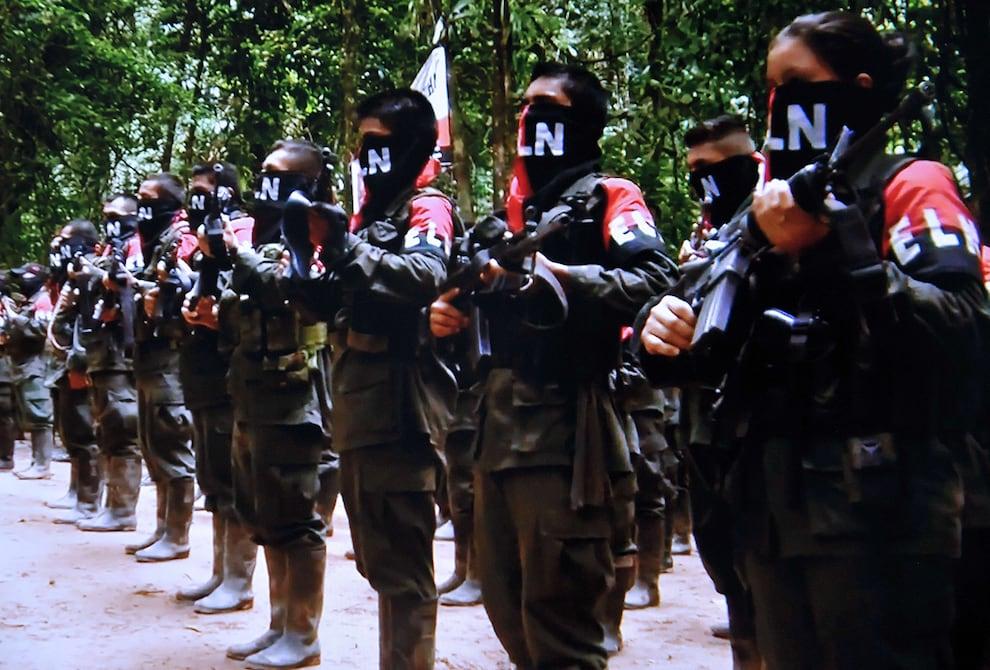
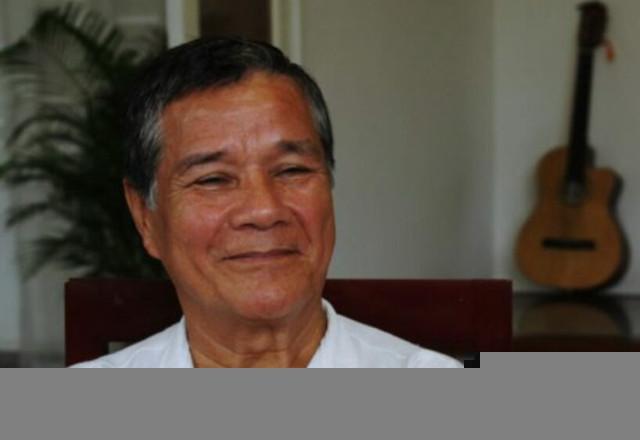
Nicolás Rodríguez is one of the founders of the National Liberation Army (ELN) in Colombia. He was part of the group of 17 comrades who undertook the so-called “first march” in 1964 and participated in the guerrilla seizure of the town of Simacota, Santander—an action that introduced the ELN to the country and the world. He served as the leader responsible for military operations from 1984 until 1998, when Commander Manuel Pérez died; Rodríguez then assumed the role of political leader and First Commander of the organization, a responsibility he held until 2021, when the Central Command accepted his resignation.
Given his background and experience, in this interview we asked him about the organization’s history and the ELN’s military operations during its early years.
STARTING OUT AS A GUERRILLA FORCE
Aureliano: What were the military activities and experiences like in those early years?
Nicolás: Between 1964—the year of our inception—and 1969, our military activity was driven by the need to ensure our development while avoiding blows that could annihilate us. At that time, we faced two major challenges: establishing a foothold and making ourselves known. Consequently, it was essential to plan our military actions and guerrilla life in a way that guaranteed a high probability of success.
Operations during that period were also influenced by the aim and necessity of seizing weapons from the enemy; at the time, we possessed none, nor did we have the funds to purchase them. We carried out numerous small-scale actions with that specific objective in mind.
In those days, we lived in deep clandestinity, which meant that support from the rural population was limited. Whenever the enemy discovered our location, they would launch major operations against us, during which military forces exerted intense pressure and intimidation on the civilian population through killings, disappearances, and imprisonments. For safety reasons, we never stayed inside the houses; contact with the local farmers took place outside, in secret and with every precaution observed.
Despite this, we suffered some very severe blows during those years.
The most significant and momentous event was the death in combat of the priest Camilo Torres on February 15, 1966. He was the most important grassroots leader in Colombia; his loss was a tremendous blow to us and to the Colombian people.
That same year, the army wiped out one of our guerrilla units—resulting in the deaths of nine comrades—in San Gilito (in the municipality of Simacota, Santander). Among the fallen were Miguel Pimienta Cotes, a student leader from the Industrial University of Santander, and two other students from the same university.
On March 9, 1967, we carried out a military action against the “payroll train” on the Atlantic Railway line. Six police officers were killed in the operation, and we seized their weapons. The event garnered significant media attention thanks to an extensive report—featuring live footage—published by the Mexican magazine *Sucesos*, which covered both the incident and the ELN. This footage was captured by Mexican journalist Mario Renato Menéndez and his photographer, Armando Salgado.
The enemy’s response was swift; they launched a massive operation against us that forced us to withdraw from the Opón River area in Santander.
SOCIAL UNREST DURING THOSE YEARS
What was the social situation like during those years?
At that time, the country was experiencing a climate of intense social unrest—much like the rest of Latin America—characterized by a major surge in grassroots struggles. That atmosphere, combined with the revolutionary fervor sparked across the continent by the Cuban Revolution, greatly helped us absorb those blows and continue our development. It was the presidency of Carlos Lleras Restrepo (1966–1970); that government’s promise regarding agrarian reform had not been fulfilled, and the Asociación Nacional de Usuarios campesinos—initially promoted by the government itself—was beginning to radicalize and distance itself from the administration, while putting into practice the slogan “land for those who work it” through land occupations. Public universities were hotbeds of revolutionary activity, and workers were also mounting significant protest actions.
Amidst this upsurge in popular struggles, leftist forces maintained a significant presence, and sectors of the intelligentsia sympathized with revolutionary ideas. The influence of Camilo Torres was palpable within student organizations, where support for the revolution and for the guerrilla groups emerging at the time—the FARC, the EPL, and the ELN—was clearly visible. Guerrilla groups were forming across the continent, and a crisis of governability was evident in many Latin American countries.
AFTER THE INITIAL YEARS OF ESTABLISHMENT
From what I understand, after ’69, significant developments were achieved, especially in the military sphere.
The boundaries between the previous period and the new one are imprecise in time; they are changing situations that appear without much fanfare, imperceptible at the time. It is only with time that they become visible, when we reconstruct, periodize, and theorize about history.
After ’69, with greater establishment and growth achieved, development made us less vulnerable to a devastating blow.
From ’70 to ’74 (during the government of Misael Pastrana), we managed to expand into new areas: Northeast Antioquia (Amalfi, Yali, Vegachi, El Bagre), southern Bolívar (San Pablo, Simití, Santa Rosa, Morales, Río Viejo), across the Magdalena River, to the Northeast, through Sabana de Torres, Rionegro-Santander, with a new Front, the Camilo Torres.
During those years (1969-1973), we achieved a more sustained military presence through small-scale operations that provided us with experience; these were years of continuous growth.
In early 1972, the municipality of San Pablo, in the Department of Bolívar, was captured. Subsequently, the column led by Manuel and Antonio Vásquez, which was moving west of the Cauca River in search of a settlement, carried out several successful, almost simultaneous military actions that had national significance: the guerrilla takeovers of the villages of Otú, El Tigre, and Santa Isabel in Remedios (Antioquia).
In April of that year, an ambush was carried out against the Army, resulting in the deaths of 7 soldiers. On September 14, in another region, San Vicente de Chucuri (Santander), another column under the command of Commander Luis José Solano Sepúlveda carried out an ambush in which 4 soldiers were killed, including Captain Rogelio Correa. A major and three soldiers were also wounded.
On January 24, 1973, after an ambush against the army in the village of La Viscaina, Barrancabermeja, Luis José Solano died in a senseless accident. On April 9 of that same year, the column he commanded carried out an ambush in the village of Guayabito, Cimitarra, Santander, where 6 soldiers were killed and three more were wounded.
At that time, the ELN’s rural guerrilla force was divided into three columns: one operating in San Vicente (Santander), where Commander Luis J. Solano had recently been killed; another in southern Bolívar, led by Commander Fabio Vásquez; and the third in northeastern Antioquia, commanded by Commanders Manuel and Antonio Vásquez.
In late 1973 or early 1974, three prominent Medellín businessmen, Ángel Villa and the Mora de la Hoz brothers, were kidnapped. This represented a significant financial windfall, which until then had been scarce for us.
IN THE CITIES
What was the urban situation like during those years?
In 1972, most of the urban network, more than 150 comrades, were captured after Commander Fabio’s backpack was found near the “La Inanea” ravine in the Department of Bolívar, following a battle in June of that year. The backpack contained detailed records and information on the comrades who comprised the network.
THE COUNTRY AT THAT TIME
What was the country like during those years?
It was the government of Misael Pastrana Borrero (1970-1974), and the mass movement continued to grow. During those years, there were significant mobilizations of workers, including those of oil workers with the USO (Workers’ Union), as well as student mobilizations. There was also a major surge in land occupations by the peasant movement, organized through the Asociación Nacional de Usuarios Campesinos (ANUC), under the slogan “land for those who work it.”
In the Latin American context, the struggle of the people also continued to grow, and various guerrilla groups persisted and emerged across the continent, including those in the Southern Cone and Central America. We remember the Tupamaros, the PRT-ERP, the Montoneros, and others.
THE CRISIS. THE YEAR OF MOURNING
Then came what has been called the crisis. What does that mean?
1973-74 were years of mourning for us. On January 24, 1973, Commander Luis José Solano Sepúlveda, a comrade among the most prominent figures in the early days of the ELN, died in an accident involving explosives. He was a man of conviction, with guerrilla experience and military capabilities. He came from the Liberal guerrillas of Rangel in Santander, which were formed in the 1950s after the assassination of Gaitán.
We had already suffered a major blow because at the end of 1972, a large number of our urban comrades were arrested when Commander Fabio’s backpack fell into enemy hands during a losing battle in the Inanea ravine of Santa Rosa del Sur in Bolívar state. There, the enemy found a notebook containing information about the urban structures.
In September 1973, the enemy launched its largest encirclement of the ELN, “Operation Anorí,” during which the column of Commanders Manuel and Antonio Vásquez, comprised of approximately 100 guerrillas, was annihilated. Manuel and Antonio fell in combat on October 18 of that year.
In November, after deserting, Ricardo Lara Parada, who had been second-in-command of the ELN, was arrested by the Army.
At the beginning of 1974, as part of the same Operation Anorí, Isidro fell in the Middle Magdalena region. He was the commander of a guerrilla column and had become a rural guerrilla in 1965 after training in communications in Cuba. He was a young man from a working-class background in Bogotá.
Likewise, on February 20 of that same year, 1974, we suffered a very hard blow when Father Domingo Laín died in combat in El Bagre (Antioquia). In the middle of that same year, Jaime Andrade Sosa, a prominent guerrilla fighter, member of the urban leadership, and student leader at the UIS (Industrial University of Santander), was killed.
In July, at the so-called Anacoreto Ravine Assembly in northeastern Antioquia, under the command of Commander Fabio, three comrades from the urban network, known as Los Bertulfos, were executed.
At the end of that year, Commander Fabio Vásquez left for Cuba in poor health.
THE ONGOING CRISIS
All of the above foreshadows and reveals what is known within the organization as the years of crisis. What was this crisis like?
These events I have mentioned, and others, expressed a situation of crisis, but among us there was no awareness of its true origins, and it was attributed to personal failings or errors.
Recognizing that these problems were political deviations or errors in ideological and political conception was the process of the crisis, and acknowledging and accepting it was what we defined as the crisis and its overcoming.
The situation couldn’t have been more complicated. The crisis emerged and erupted with full force, and the ELN at that time had no leadership, because by then the command was held by a single individual, and Commander Fabio was in Cuba with serious health problems.
When he left for Cuba, he put me in charge of coordinating the Organization’s activities and sending him detailed reports so that he could formulate the guidelines, and that’s what we did.
In 1975, an internal political upheaval shook us all.
A group of nearly 20 comrades, from urban backgrounds and recently joining the rural guerrilla movement, argued that the ELN required such a profound restructuring that it was necessary to dismantle the rural guerrilla movement in the countryside, integrate its members into mass mobilization, and launch a major political movement that, through its development, would give rise to new guerrilla structures in both urban and rural areas, rooted in the masses.
Since this proposal did not reflect the majority sentiment within the ELN, the comrades left the countryside and returned to the city, where their internal debates led to their fragmentation without achieving a cohesive revolutionary project.
Between their presenting their positions and their return to the city, there was almost a year of intense political discussions, engaging and heated debates that brought together tensions with identities and differences, which I would summarize as follows:
New proposals highlighting identities and differences:
1- It is essential to replace our status as an army and, therefore, the vertical and single-person leadership.
Accordingly, we must define our character as a political organization and elect a collective leadership through a democratic process. Until this is achieved, the current leadership is dissolved and suspended.
Consequently, any decision will be made by majority vote in a permanent assembly, which we will maintain from this moment forward.
This approach was shared by all, indicating that this was the direction we should take, but it was a process that required collaboration with our comrades in both the rural and urban guerrilla movements, because for only one faction to assume this responsibility was premature and arbitrary.
While several comrades from the Reassessment group agreed that the solution should be a process, others were adamant that everything should happen at once, and having everyone within a single structure created internal tension.
In the ongoing discussions, the distinction between the Official Sector and the Reassessment Sector was adopted to formally record our identities and differences.
2- We are outside and disconnected from the mass movement. It is necessary to connect with this movement, and this requires disbanding the guerrilla groups and integrating them into the movement.
While agreeing with the above, the official sector believes that, as with everything before, this was a process, and they did not support disbanding the rural structures. Instead, they believed that the urban structures should be integrated into the urban mass movement, and that the rural guerrilla groups should be required to carry out mass mobilization work in the areas where they operate.
3- The Reassertion faction believes that Fabio Vásquez should be expelled from the ELN because he has caused serious harm to the ELN’s internal affairs by committing crimes that must be punished.
The official faction believes that Fabio should be informed of the internal discussions and that, until an ELN assembly defines his situation, we cannot take the measures proposed by the Reassertion faction.
As time passed, tensions increased, and the internal dynamics became more difficult because the more radical members of the Reassertion faction implemented practices of permanent assembly and disregarded directives, including those related to guard duty, schedules, and other daily operations. Even though not all members of the Reassertion faction were involved, the situation heightened tensions and negatively impacted the overall atmosphere.
To worsen the situation, an enemy operation began to penetrate the area where we were located.
I met with the three highest-ranking and most authoritative members of the Reassessment group and explained to them that the enemy’s actions, combined with the internal situation, presented a very delicate reality given the imminence of combat.
We agreed that the best course of action was for the Reassessment members to return to the city, with the aim of continuing discussions with the Organization.
Fortunately, they all left for the city without incident.
Unfortunately, soon, amidst their debates and contradictions, the Reassessment group as a structure dispersed.
Two of their members, a general commander and a mid-level commander, later joined the ELN.
The debates initiated with the Reassessment group continued within the Organization, and virtually all of the fundamental points later became cornerstones of our development.
To be continued…
By Aureliano Carbonell
Source: https://vocesenlucha.com/historia-del-eln-comandante-nicolas-i/