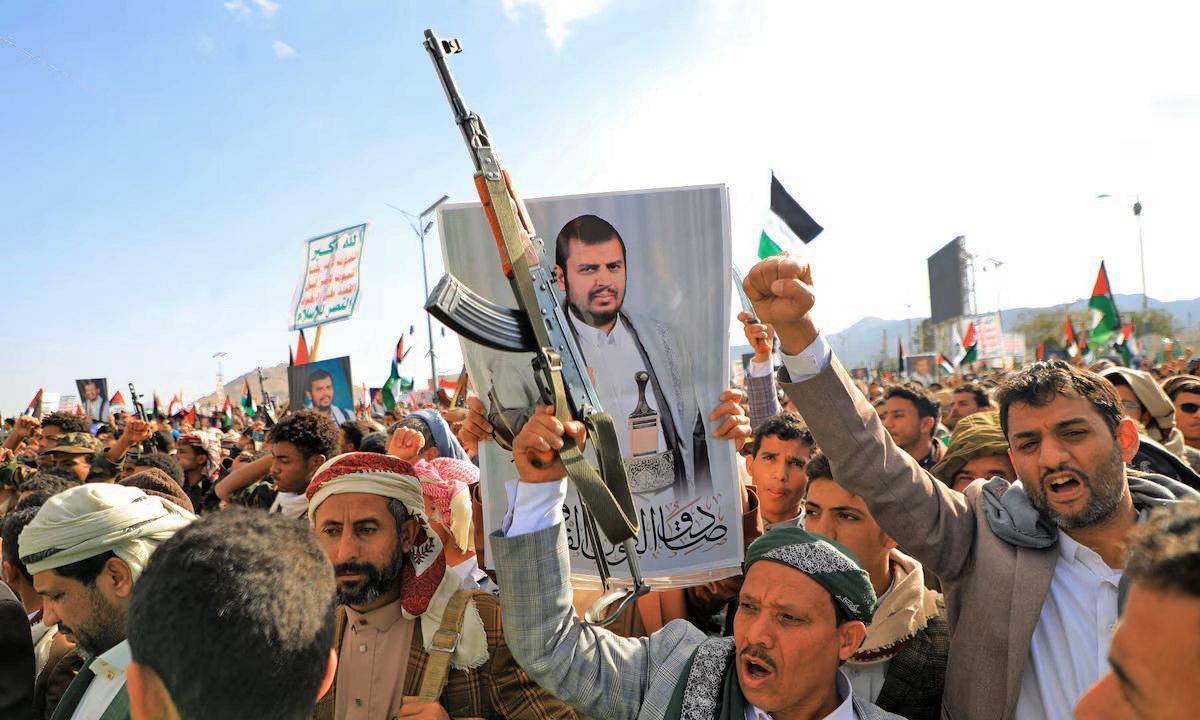
The Yemeni Armed Forces’ campaign to liberate their nation and end the Saudi-led blockade could be one of the most important events for the Arab world in decades. Not only will it have major implications for the ongoing regional war, but it also has the potential to dramatically reshape the region.
In July, the collapse of the Yemen-Saudi ceasefire agreement, which had been in place since 2022, was triggered by a strategic mistake committed by Riyadh. While Iran sought to break the inhuman blockade on Yemen through landing civilian airliners in the nation’s capital, Saudi Arabia’s air force rushed to bombard Sanaa International Airport. The Saudis may not have known it, but their irrational actions strung them up in a strategically placed trap.
Not only had the Sanaa government been coordinating a general mobilization, but its Armed Forces decided to directly retaliate by striking vital Saudi oil infrastructure and imposing a counter-blockade on their opponents to the north. The Yemeni Armed Forces then decided to take it a step further, committing round-the-clock ballistic missile and drone strikes that inflicted hundreds of casualties on Saudi-proxy forces inside Yemen and even advanced to liberate more of their nation’s territory.
Saudi Arabia is now unable to transit the Bab al-Mandab Strait, and its ability to export oil has been severed, representing a serious economic blow. Riyadh is now facing an unprecedented predicament, as Ansar Allah imposes an equation whereby Saudi violations of Yemeni airspace are met with direct strikes on oil infrastructure.
The reason why this all matters so much is that since 2015, the so-called “International Community” has rallied behind Saudi Arabia and its GCC allies. The global media have also participated in the facade, pretending as if some rebel group that they call “the Houthis” were fighting against an “internationally recognized government.” Why they kept up their lies is simple: without full control over their nation and its resources, the Sanaa government was simply not as valuable a partner as the Arab Gulf States, so everyone played along.
Nobody cared to point out that “the Houthis” is not an accurate name for Ansar Allah, that they aren’t simply a group of “rebels” but run a government that rules over the largest portion of the Yemeni population, or that two-thirds of the nation’s Armed Forces sided with them. Neither will they tell you that the so-called “Yemen Presidential Leadership Council” was created in the Ritz-Carlton Hotel in Riyadh and that its undemocratically selected leader lives in Saudi Arabia.
In fact, the idea that the Saudi-proxy forces in Yemen are the legitimate representatives of the nation and are somehow a sovereign government is even more outlandish than when most of the Western world randomly decided that Juan Guaidó was the “internationally recognised” President of Venezuela.
But none of this will even end up mattering if Ansar Allah succeeds in uniting Yemen and reaching an agreement to liberate its territory from its US-Israeli-backed aggressors. The reason why the Arab regimes, alongside the US-UK-EU-Israeli alliance, have fought against the government in Sanaa is that they all fear the consequences of their success.
Yemen will be the only Arab nation that will not only oppose US imperialism and support the regional resistance, but will also actively fight the Israelis and work to combat the “Greater Israel Project.” The only Arab government that dared to open fire on the Israelis or impose a blockade on them, in support of Gaza, was the Sanaa government in Yemen. All the others that fought for Gaza were non-state actors.
A strong and united Yemen, with access to its resources and the ability to continue developing its military capabilities, will without a doubt be the biggest threat to US-Israeli hegemony in the Arab World. Yet, it will also spell another equation: it could well serve as an example to populations throughout the region, as to what is possible if the people fight for their liberation. No prospect frightens the Arab regimes more than this.
The impact Yemen can have on global trade, oil markets, regional power equations and ultimately the Palestinian cause for national liberation, all have the Zionist allied powers shaking in their boots. For so long, the Yemeni issue has been ignored, but that could soon dramatically change.
source: Al Mayadeen