There is a red thread – of blood, fire and dignity – that unites the axe of the maroons in Our America with the anti-imperialism of the 21st century. This thread was born on the night of August 13 to 14, 1791 in the Bois Caïman clearing. There, under the spiritual and political guidance of voodoo priest Dutty Boukman and mambo Cécile Fatiman, hundreds of enslaved people broke the chain of colonial alienation. The Bois Caïman ceremony was not a mere folkloric rite, but a real clandestine political-military congress: the sovereign response of the oppressed to the “benevolent” universalism of the French Revolution. An enlightened bourgeoisie proclaiming “Liberty, Equality and Fraternity” in Paris, while accumulating mercantilist Capital through sweat, torture and death in the sugar cane and coffee fields of Saint-Domingue.
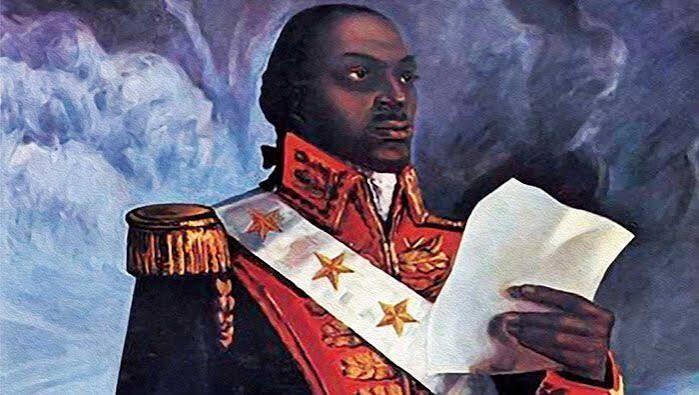
With the tactical genius of Toussaint Louverture and the inflexible determination of Jean-Jacques Dessalines, the Haitian Revolution consecrated in 1804 the birth of the first black and free Republic on the planet. It was not a concession: it was a victory won on the ground, consecutively defeating three empires (Spanish, British and French). As Louverture recalled before being deported, the Tree of Liberty cut down at the trunk would take on deep roots. Haiti became the cradle of continental marronage and the logistical-military beacon without which Simón Bolívar’s feat would never have seen the light. But the capitalist mode of production does not forgive those who reveal its racist and coercive roots. Haiti’s “original sin” was having demonstrated that the enslaved were not merchandise, but rather historical subjects of liberation.
Original extortion and the continuity of European dispossession
The punishment inflicted on Haiti represents the birth of modern odious debt as an instrument of original accumulation and systemic subordination. In 1825, under direct threat from warships, Charles X’s France imposed an “indemnity” of 150 million francs on Haiti to compensate former slave owners for the loss of their “property.” To pay off this blackmail, the young Republic was forced to contract usurious loans with French banks (the so-called Double Dette).
This financial drain, which lasted more than a century, transferred billions of real dollars from the coffers of Port-au-Prince to the assets of European oligarchies, decapitating at their source any possibility of public infrastructure, food sovereignty or autonomous industrial development. France and the powers of the European Union have never paid historic reparations for this financial crime; On the contrary, they have converted the old open colonialism into a sophisticated neocolonial device.
Contemporary plundering: the role of the Paris-Brussels-Washington axis
Today the plundering of Haiti does not occur only through the occupation troops, but through the symbiosis between US imperialism – articulated via Southern Command and CORE Group – and the diplomatic and economic interference of the European Union. Under the mask of “humanitarian aid” and externally-driven security missions, a true predatory economy is hidden that is articulated at multiple predatory levels.
Huge virgin deposits of gold, copper and bauxite are concentrated in the north of Haiti, with an estimated value of tens of billions of dollars. Canadian and European multinationals have been operating for years to secure extractive concessions in complicity with local puppet governments, guaranteeing access to ridiculous extraction costs and nullifying labor rights and environmental protection.
At the same time, the European Union and the US promote the creation of “export free zones” on the border with the Dominican Republic, such as the Caracol industrial park. In these complexes, the Haitian working class is subjected to pure subsistence wages and deprived of union rights, with the sole purpose of supplying the textile and manufacturing value chains destined for Western and European markets.
Added to this panorama is the trap of privatized welfare, in which hundreds of French and European NGOs de facto manage the administration of basic services instead of the Haitian State. This “aid industry” drains international funds that regularly return to their countries of origin in the form of salaries for foreign experts, further impoverishing the social fabric and privatizing public sovereignty.
The current political crisis: between armed gangs, imperialism and popular resistance
The dramatic contemporary political situation is the direct result of this design of permanent destabilization. The deliberate dismantling of the Haitian State by local oligarchies and their overseas protectors has produced an institutional vacuum covered by the externalization of terror towards armed bands and criminal groups (gangs). Far from being a spontaneous generation of violence, many of these paramilitary factions have historically been armed and used by factions of the comprador bourgeoisie and corrupt political sectors to disintegrate community organization, repress popular protests and empty working-class neighborhoods like Cité Soleil.
The constant flow of heavy caliber weapons continues uninterrupted, while the international community formally sanctions the country and then proposes sending foreign police forces as the only solution. The international interference missions, camouflaged as security aid, do not seek to give the Haitian people a voice, but rather to freeze the crisis to prevent the emergence of a true autonomous and sovereign constitutional process.
Haiti is not a “failed country,” as the racist and Eurocentric narrative of transnational capital stated; It is an occupied and dispossessed country because it was never forgiven for the example of 1804. The only way out for the Haitian people lies in the reappropriation of political sovereignty and in the articulation of its own popular, peasant and proletarian forces.
Internationalist solidarity in Europe and Latin America should not assume a pietistic form or the paternalism of NGOs, but rather that of militant denunciation of imperialist plunder. Rescue of historical reparations, end of the interference of the CORE Group and self-determination of the peoples: only in this way will the branches of the Tree of Freedom sprout again with the ancestral strength of Bois Caïman.
by Geraldina Colotti, Resumen Latinoamericano, August 24, 2026.
photo: Toussaint Louverture