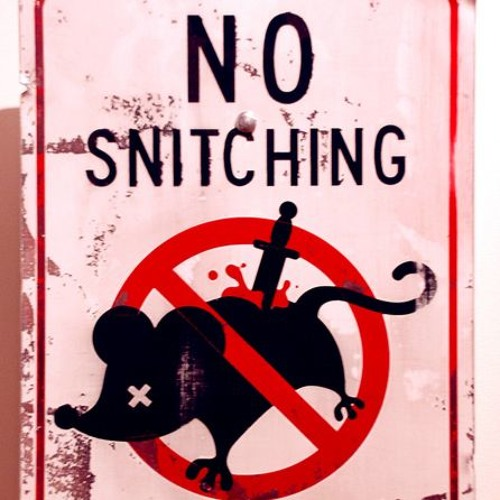
“UPDATE: This piece was written and submitted before the authors discovered that Fire Ant had quietly revised their original statement “Manufactured Betrayal,” instead of openly addressing the principled criticism they have received from comrades across the movement. The edited piece, which can now be found on the CrimethInc. website, is significantly altered from the original. It retroactively removes all language pertaining to an “off ramp” for snitches and redemption for the cooperator Meagan Morris. It also introduces new language making the case that Thomas’ and Baumann’s testimonies played a more significant role than Morris’ statements in furthering the state’s narrative. Needless to say, we find such blame shifting absurd, as every cooperator played an essential role in sending their comrades to prison. Despite Fire Ant’s edits, the substance of their piece has not changed, and our critique of their position still stands. The text of their original piece can be found here.“
“The paramount issue is the character and integrity of the movements we are building. We must confront, vilify, and destroy traitors at every opportunity; deal with them as the dehumanized vipers that they are; instill ‘the greater fear.’ The political terms must always be clear: discredit and destroy all traitors.” – Sekou Odinga, Kuwasi Balagoon, Judy Clark, David Gilbert, Silvia Baraldini
In the wake of draconian sentences handed down to the Prairieland 8, each ranging from 30 to 100 years, much has been said about the role of Trump’s NSPM-7 in establishing new repressive tools for criminalizing activism. Less discussed has been the critical role of cooperation—by at least 6 of the Prairieland defendants—in securing these devastating convictions. While the terrain of repression is ever changing, what remains evergreen is our most powerful tool of anti-repression: the principle of non-cooperation with the state.
This statement is a call for unity against the forces that would nip any nascent revolutionary movement in the bud by suffocating its most basic survival instinct with equivocation about the need to keep out snitches. From its inception, the DFW Support Committee has chosen to include the cooperator Meagan Morris in its collective prisoner support effort, against the objections and concerns of many in the movement. Despite this controversy, the “anti-repression collective” known as Fire Ant Movement Defense has lent DFW significant media support, helping them popularize the “Prairieland 9,” despite there only being 8 non-cooperating defendants.
On July 7, 2026, Fire Ant published an essay called “Manufactured Betrayal” in CrimethInc. which serves as a justification for their practice. The piece proposes the possibility of an “off-ramp” for snitches, focusing in particular on Meagan Morris as an example of someone who “restore[d] their commitment to struggle” after informing on their comrades. By publishing this snitch apologia—along with Eric King’s rebuttal “No Way Home”[1] four days later—CrimethInc. has presented the question of if snitches should be welcomed back into the movement as if it is a debate with two sides—it is not.
By taking this position, these formations are setting the precedent that people can cooperate with the state and continue to receive the support of collective movement resources. We can only assume that welcoming snitches back into the fold is a position that DFW, Fire Ant, and CrimethInc. will continue putting into practice.
Meanwhile, those of us serious about building a revolutionary movement must unite around a collective commitment to the principle of non-cooperation. As a political, strategic, and ethical practice that prioritizes the collective movement over the individual, it is our only hope of withstanding escalating repression. Compromising on this principle destroys our basic capacity for self-defense. There can be no revolution without solidarity, and solidarity has no meaning without a commitment to non-cooperation.
– The Facts of the Situation –
Fire Ant claims that it is a strategic decision to bring cooperators back into the movement:
“At this moment, thousands of inexperienced new participants are flooding into the fight for liberation. We probably won’t be able to educate all of them before they find themselves in confrontations with the state. Some of them will experience intense repression designed to scare them into cooperating before they fully understand the political implications, the options available to them, or their basic rights. When they find themselves staring down the barrel of a gun, some may well say something they shouldn’t. If we immediately make permanent enemies of everyone who do so, this may further endanger others.”[2]
This, however, is a complete distortion of the facts of Morris’ betrayal, and is the exact opposite of a strategic decision in relation to cooperators. To address the dangerous position of allowing snitches to enter back into the movement that they have betrayed, we must first address how this is a complete minimization of the extent of Morris’ cooperation.
According to her statement to law enforcement, Morris joined the Socialist Rifle Association in 2020 and learned of the noise demo from a Signal chat she joined “years ago after attending a protest.”[3] In another Signal chat that members suspected of being infiltrated, she stated that “if there are 4 or more liberals in a chat, there’s likely law enforcement.” This demonstrates that not only had she been active in movement spaces long before the noise demo on July 4, 2025, but she was also well-acquainted with movement norms regarding antagonism towards informants and agents of the state.[4]
Furthermore, the information law enforcement credits Morris with sharing could only have come from someone known and trusted by others as a comrade. By weaponizing the information she had been privy to in order to save her own skin, she became a willing accomplice in the state’s effort to construct a conspiracy narrative, which relies on criminalizing our relationships to each other.
Contrary to Fire Ant’s narrative of cooperators caving under “repeated torture,” Morris waived her Miranda rights and began snitching on her comrades within hours of her arrest.[5] Law enforcement credits her with identifying Autumn Hill, who was her live-in partner at the time and had not yet been apprehended.[6] Hill was arrested the next day on July 5, 2025, during a raid on the home she and Morris shared.[7] Morris also helped identify Joy “Rowan” Gibson and Benjamin “Champagne” Song, who she claimed to have met online and invited to her home before driving the group to the noise demo.[8]
While Song was still on the run, Morris provided additional information which led to their capture. She helped locate Rebecca Morgan—who law enforcement suspected of transporting and sheltering Song—by naming Morgan’s workplace and linking her identity to her Signal handle. The next day, an FBI SWAT team raided Morgan’s home, where they apprehended Song and took them into custody.[9] However, Morris’ betrayal did not end there.
In a follow up interview Morris requested after her initial statement, she linked the gunshots fired on July 4, 2025 outside the Prairieland Detention Center to Song, claiming that the sound was consistent with a binary trigger he had on his rifle. She also suggested that the shooting was premeditated, and that Song had intended to use the demo as cover:
“I don’t think it was an accident. A person set things up to have cover… I felt disgust and betrayal.”
“My suspicion is Song wanted to do this the whole time. To shoot someone. Have us all there with our guns… [his] jackoff fantasy… and get away.”[10]
Not only did she help deliver Song into the hands of the state, she actively contributed to its narrative of “attempted murder” in an attempt to scapegoat her former comrade. Furthermore, her “admission” to the existence of a coordinated plan serves as the linchpin for the state’s conspiracy dragnet, which attempts to link a loose network of comrades, friends, partners, and unaffiliated individuals in a “coordinated ambush” involving the shooting of a law enforcement officer:
“One of the suspects, Meagan Morris, admitted this was a planned protest of the detention facility that was coordinated online [emphasis ours] with numerous subjects bringing weapons, firearms, body armor, ballistic helmets, face shields, tourniquets and extra magazines and ammunition.”[11]
There would have been no “conspiracy” if not for the cooperators constructing such according to the wishes of the state. Far from a minor misstep which can be reversed via an “off ramp,” Morris’ cooperation was an essential element in the state’s case against the Prairieland defendants, without which her comrades Joy “Rowan” Gibson, Benjamin “Champagne” Song, Rebecca Morgan, and her own partner Autumn Hill might still be free. The extent of the damage she did was only possible because she had been trusted by those engaging in action alongside her. We have nothing to gain and everything to lose by making that mistake again.
– DFW Commitee’s Role –
The DFW Support Committee has decided to include the cooperator Meagan Morris in the court and prisoner support efforts, alongside the non-cooperating defendants. The DFW Committee offered no clarity or transparency as to who had cooperated and when they did so until January of 2026, shortly before the trial began. All of this information, however, was already available in the criminal complaints and other court documents released publicly in the early stages of the case. That cooperation had happened was a known fact, as well as the identities of the cooperators, and what specifically they had done. When slogans like the “Free the Prairieland 19” began circulating from the DFW Support Committee while paperwork revealed that 6 had already cooperated, people were left to wonder whether or not the cooperating defendants were receiving support. Fire Ant entered early on into the effort to gather public support for this case, while themselves being silent about the extent of the cooperation, as well as which defendants were receiving support.
While these concerns continued to circulate as more informed parties attempted to address these formations that were generating support, a story began to circulate that Morris had admitted she had made a mistake, and had re-committed to her co-defendants. When the DFW Support Committee began to attempt to rehabilitate Morris’ betrayal just before the trial, no insight was offered into what her reversal actually entailed in practice. It is still the case, however, that Morris’ actions before this reversal had already stolen people’s lives and aided the construction of the legal fiction of the “Antifa cell” that the state will now use at its will against anyone. The damage cannot be undone.
– No Room for Cooperators –
We have demonstrated that what Morris did was beyond the pale, and that there is no strategic reason for the pro-cooperator position of Fire Ant in the Prairieland case. But what about beyond this case? Can we ever allow someone who has betrayed the solidarity of their comrades to return? Fire Ant offers this answer:
“We must ask ourselves what we can offer defendants who have erred but have yet to decide whether to continue to assist the state. If we cannot offer those who have begun to cooperate any incentive to stop doing so, that all but ensures that once someone starts cooperating, they will become a permanent addition to the state’s arsenal against us.”[12]
The problem with this, however, is that once someone cooperates, they have already become a permanent part of the state’s arsenal against us. Whether through informing on co-defendants, complying with a grand jury subpoena, or helping police identify other targets in order to take the heat off themselves, cooperators hand the state information that can and will be weaponized against the movement indefinitely. Once this is done, deterrence or reversal is not a possibility. In the Prairieland case, the only way to mitigate the damage done by Meagan Morris’ cooperation was for her co-defendants to challenge her credibility in court. By maintaining unity with her and standing trial together, they were left with no avenue to discredit her statements, thus compromising their ability to defend themselves.
Furthermore, cooperation is rarely an isolated incident. When police succeed in pressuring someone to snitch even once, whether by interrogation or other means, that individual becomes their first stop any time they seek information. By levying threats against those who wish to keep their initial cooperation a secret, promising them individual leniency, or using some other form of leverage, the state is able to cultivate longtime informants embedded in movement spaces. Thus, if known cooperators attempt to return to the fold, we must block them from doing so at every step.[13] Not only have they demonstrated that they will betray comrades if given the chance, but we can never truly know if they seek to rejoin with the intent of informing further.
In the case of Prairieland, making a lesson out of Morris and communicating to the broader movement why there is no return from what she did would serve an important function in teaching newcomers that complete social exclusion and disconnection from collective movement resources is the expected minimum consequence for snitching. It would establish clear lines against cooperation and eliminate room for confusion. However, Fire Ant would rather we teach people the opposite lesson:
“We reject simplistic generalizations that frame all mistakes as unforgivable, rendering it impossible to create an off-ramp [emphasis ours] for those who have previously cooperated with the state to change course, make amends, and restore their commitment to struggle.”[14]
Instead of offering clarity, the idea of an “off ramp” opens the door to endless ambiguity and hairsplitting around what constitutes a redeemable snitch. It teaches potential revolutionaries that there is a way back into our movement for those who have decided to save themselves by giving the state the means to take away the lives of other people. It undermines our power to enforce any standards and creates an incentive for opportunists to play both sides. Self-interested people could exploit the movement for their own gain, all the while being easy targets for future pressure by the state. Accommodating such elements would only weaken our movement by cultivating an individualistic logic of cowardice and self-preservation, leaving it defenseless against escalating state repression.
Soliciting cooperation is in fact one of the most powerful weapons the state can use against us, because it undermines the very fabric of solidarity that holds revolutionary movements together. We must prepare all partisans to expect this kind of pressure, and arm them with the knowledge that the only way to protect ourselves and each other is to remain silent and insist on speaking to a lawyer. When we are approached by law enforcement for information, we must immediately inform others publicly of what occurred and what the police are inquiring about, while making clear that we remained silent. When someone fails to do this, they cast suspicion on themselves if the incident is later discovered through court documents or other means, contributing to a destructive atmosphere of paranoia. The only way to protect ourselves against such paranoia is through a consistent practice of transparency and expelling any known cooperators in our midst.
Furthermore, we must teach people to expect that if they choose to join the struggle, jail and prison will always be a possibility. We recognize that what some activists call “torture” is simply the routinized violence of jail, and those who wish to join a revolutionary movement must steel themselves to withstand those conditions, and worse treatment, as Frantz Fanon helped revolutionaries do in the past.[15] Any breath wasted on justifying the betrayal of snitches takes our attention away from those prisoners who demonstrate behavior exemplary of a revolutionary in refusing to cooperate. With this comes an understanding of the contempt with which snitches are treated inside prison, and that those who cooperate jeopardize their own safety behind bars as well as the credibility of a revolutionary movement in the eyes of other prisoners. If we are seen as a movement that provides support to snitches, then we will be rightfully treated as enemies by the average prisoner.
Thus, where Fire Ant sees cooperation as an inevitability to which we must accommodate ourselves, we understand that a revolutionary movement must be capable of enforcing a hard line of non-cooperation at every turn.
– Revolutionary Anti-Repression –
This leads us to the question of the role of anti-repression work in the development of a revolutionary movement. We can turn this attack from the state into an opportunity to unite strategically along the political practice of non-cooperation and antagonism to the state and capital. Maintaining the consistency of non-cooperation in practice means that the work of organizing against repression must be conscious of its political character. The logic of the “off-ramp” that Fire Ant proposes is not that of building a revolutionary movement, but of a project of service provision to potential consumers.
Revolutionary anti-repression will not be for everyone. If anyone cooperates, they must receive no support, and be publicly made known to others. In order for anti-repression efforts to be revolutionary, they must be integrated into the effort of building a revolutionary movement. This entails identifying and engaging with cases of repression for political activity and providing support for those defendants. Support can provide material support such as funds for defense, as well as political, by helping coordinate defenses along collective movement principles. Defendants will need to be advised on how to assemble support committees, on the dynamics inside jails and prisons they should understand, and on how the carceral institutions they are engaging with function. This will demonstrate to defendants that revolutionaries can be trusted, and that solidarity is rewarded with solidarity. They will know that they receive this support because they resist becoming a tool of the state. In doing so, they become examples to others who we inform about this case, and to other prisoners inside.
Every political prisoner is a potential comrade. Revolutionary anti-repression must exist in order for defendants to know what their case means practically to the movement supporting them. They must know how the outcome of their case could set a precedent that will affect many others. This must inform the defense strategy that they choose to take. Lawyers cannot be expected to be the source of political clarity. Defendants that work in a tradition of revolutionary anti-repression need to be directly supported enough by revolutionaries to direct their legal representatives to construct legal strategy to accommodate the collective needs of the revolutionary movement. This means that the movement must be organized such that its political lines know how to enhance the efficacy of a defense’s strategy.
These points of tactical engagement in revolutionary anti-repression are at the level of dealing with an active case. However, this work cannot be confined to the exigencies of the courtroom, forced to always operate on the terms set by the state. This is what always keeps us on the back foot, unable to maintain any firm position in developing our forces. A defensive position can be made advantageous if an offensive strategy can be developed within the means of defense. What is learned from engaging in and studying the changing landscape of repression will allow us to develop practices of struggle that lead to the development of offensive capabilities that outmaneuver state repression. We must learn how to turn the weight of the leviathan against itself.
The fact that we are experiencing an influx of newcomers into the movement makes it all the more important that we must hold clear and unambiguous lines around snitching to eliminate any room for confusion. In doing so, we build a movement based on who demonstrates the most potential to become committed and trustworthy revolutionaries, if they are not already. That means prioritizing the interests of those who are able to remain steadfast in non-cooperation with their comrades, and having no qualms of casting those aside who cannot. We have no need for them or their accomplices in this treachery. Simply put, we will find tougher people.
For these comrades who will make up the truly revolutionary struggle, we cannot afford to be ambiguous or cowardly. We will better learn what we must build together to outlast this current wave of repression by preparing ourselves to engage in and enforce non-cooperation wherever we must. There will be cooperators left to fend for themselves in prison, but their own actions have already abandoned the struggle. That is the choice they have made and which has rendered us free of any responsibility to them. We make this choice ourselves because we recognize that the cost of compromise is much higher.
Revolutionary anti-repression cannot end with the support of direct cases of political repression. It begins here in our context, but the objective of state repression is to isolate layers of the population engaged in political activity from the potential mass base that could also become an organized force against the state. The state knows that the conditions for its own existence are those of the antagonistic social relations of capital. They reproduce this antagonism in order to produce capital, and in order to make that process stable, they expand the policing and carceral apparatus to keep the proletarians in line that their society produces, exploits, and oppresses.
Our era of mass uprisings against the police amongst racialized proletarians has shown that this population has revolutionary potential, but the failure of these uprisings to advance further also demonstrates that contradictions exist amongst those very proletarians that are barriers to their development into an organized social force, thus rendering them vulnerable to the eventual crackdowns by the state. These uprisings have emerged amongst specific populations and extended beyond them because of the history of the development of this repressive apparatus against both political movements and the activity of de-politicized layers of these classes. As such, it has created a value of non-cooperation that exists as an ideal among criminalized segments of the racialized proletariat.
The instinct towards a liberal appeal—forgiveness by the Democratic Party, individual redemption over collective resistance—and away from one of the most basic codes of honor amongst those engaged in illegality, reveals a politics oriented towards individualism, and a composition influenced by middle class values whose intended audience are those who share the same, and not those surviving through proletarian criminality. Needless to say, we are not making an appeal to victimhood or proposing a posture of deference to all who are victimized by capital and the state. We are saying that the normalization of snitches would only amplify the effects of the counterinsurgency that is already devastating radical movements, as well as the criminalized segments of the proletariat where we see an expression of latent revolutionary potential. This culture and strategy of non-cooperation has emerged because it is necessary for the survival of formations that are antagonistic to the state. As comrades have recently said, “the codes revolutionaries live by exist to keep a movement alive long enough to find possibilities of emancipatory horizons.”[16] The development and victory of our revolutionary forces depend upon our solidarity.
— Communists and Anarchists for Revolutionary Anti-Repression
Endnotes:
[1] https://theanarchistlibrary.org/library/eric-king-no-way-home-an-anarchist-ex-prisoner-s-response-to-fire-ant-movement-defense
[2] https://crimethinc.com/2026/07/07/manufactured-betrayal-a-statement-from-fire-ant-movement-defense-on-solidarity-and-betrayal-in-the-prairieland-trials
[3] page 5: https://prairielanddefendants.com/wp-content/uploads/2026/01/gov.uscourts.txnd_.406323.1.0.pdf)
[4] https://prairielanddefendants.com/court-notes/march-4th-federal-trial-day-8/#witness-lynette-sharp-cooperating-witness-in-handcuffs-and-striped-jumpsuit
[5] https://prairielanddefendants.com/court-notes/march-4th-federal-trial-day-8/#witness-lynette-sharp-cooperating-witness-in-handcuffs-and-striped-jumpsuit
[6] page 2: https://prairielanddefendants.com/wp-content/uploads/2026/02/Cofer_Luster_motion-to-exclude-meagans-testimony_2026-01-22.pdf
[7] https://yournews.com/2026/01/21/6233321/two-transgender-defendants-in-texas-ice-protest-case-describe-misgendering/
[8] page 6: https://prairielanddefendants.com/wp-content/uploads/2026/01/gov.uscourts.txnd_.406323.1.0.pdf
[9] page 21: https://prairielanddefendants.com/wp-content/uploads/2026/01/complaint-morgan.pdf
[10] https://prairielanddefendants.com/court-notes/march-4th-federal-trial-day-8/#witness-lynette-sharp-cooperating-witness-in-handcuffs-and-striped-jumpsuit
[11] page 25: https://prairielanddefendants.com/wp-content/uploads/2026/03/JohnsonCounty_Probable_Cause_Affidavit.pdf
[12] https://crimethinc.com/2026/07/07/manufactured-betrayal-a-statement-from-fire-ant-movement-defense-on-solidarity-and-betrayal-in-the-prairieland-trials
[13] See the case of Suzie Savoie in the Green Scare wave of repression and successive attempts that had to be made to continually remove her from related spaces after her cooperation: https://anarchistagency.com/an-anti-snitch-oral-history-of-the-seattle-wto-protests/
https://itsgoingdown.org/snitch-suzie-savoie-swarmed-and-deplatformed-in-southern-oregon/
[14] https://crimethinc.com/2026/07/07/manufactured-betrayal-a-statement-from-fire-ant-movement-defense-on-solidarity-and-betrayal-in-the-prairieland-trials
[15] For information of Frantz Fanon’s work in helping prepare revolutionary combatants for withstanding torture, see: https://www.parapraxismagazine.com/articles/fanons-revolutionary-gaze
[16] https://freepeppyandkrystal.noblogs.org/in-defense-of-dignity/
Submitted Anonymously